TL;DR:
- Most Montreal art walks fail when organizers overload content, neglecting pacing and thematic focus.
- A well-designed route emphasizes quality stops, storytelling, and intentional flow to create meaningful experiences.
Montreal has a way of hiding its best art in plain sight. You could walk past a stunning mosaic, a towering mural, or a quietly radical sculpture and never know the story behind it. Generic city tours skim the surface, hitting the same predictable landmarks while skipping the layered, neighborhood-level culture that makes this city genuinely extraordinary. The good news? Montreal features nearly 1,000 public artworks by close to 500 artists, which means you have an almost embarrassing amount of material to work with. This guide gives you everything you need to design a custom art walk that fits your pace, your passions, and your sense of wonder.
Table of Contents
- What you need to design your art walk
- Choose your route theme and focus
- Step-by-step guide: Planning your Montreal art walk
- Enrich the experience: Stories, history, and interaction
- Why most Montreal art walks fall flat—and how yours can be different
- Take your Montreal art walk further
- Frequently asked questions
Key Takeaways
| Point | Details |
|---|---|
| Build with storytelling | A strong theme and narrative arc make your Montreal art walk memorable and engaging for all participants. |
| Use smart mapping tools | Interactive platforms and mobile apps let you plot, access, and share walks easily, enhancing walkability and access. |
| Keep it manageable | A route of 6-12 stops and 2-4 hours is ideal for comfort, engagement, and satisfaction throughout your walk. |
| Add local flavor | Mixing public art with local cafés, historical sites, or puzzles transforms a simple walk into an immersive cultural journey. |
| Learn from experts | Focusing on quality over quantity and user pacing avoids fatigue and ensures your art walk truly shines. |
What you need to design your art walk
To get started, you’ll need a few essential resources. Let’s look at the basics you’ll want before choosing your theme or route.
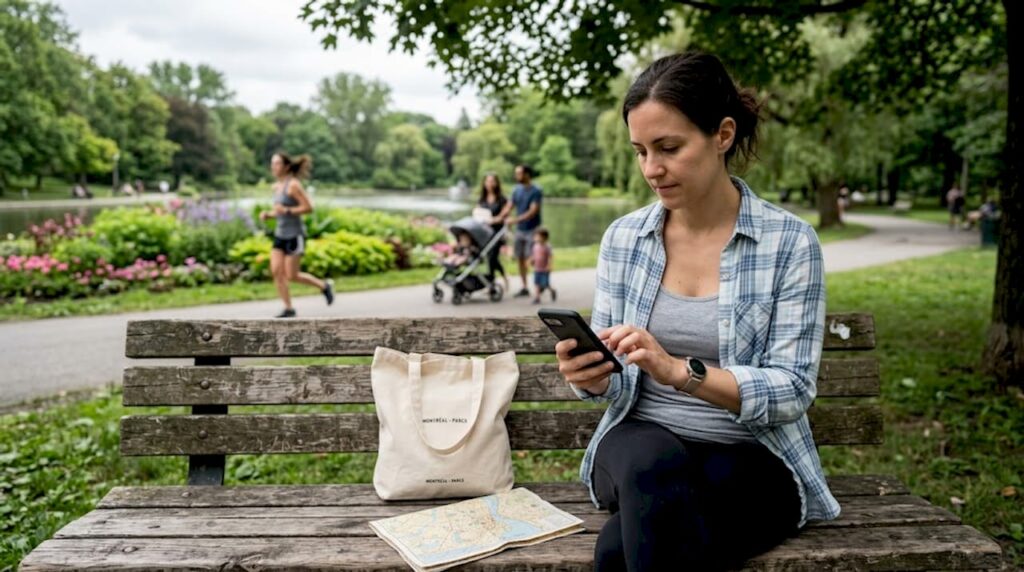
The single most valuable tool at your disposal is the Art Public Montréal interactive map, which lets you browse hundreds of public artworks by neighborhood, medium, and artist. It also offers pre-designed self-guided tours, so you can use those as a foundation and build from there. Think of it as your art walk skeleton.
Beyond the map, here’s what to bring:
- Comfortable, broken-in shoes. You’ll be covering 1.5 to 3 miles, and blisters are nobody’s muse.
- A fully charged phone with offline map access. Cell service can be spotty in certain corridors.
- Water and a light snack. A two to four hour walk deserves proper fuel.
- A small notebook or voice memo app. You’ll want to capture reactions, questions, and ideas in the moment.
- Accessibility notes. If anyone in your group uses a wheelchair or has mobility needs, map your route using Google Maps with wheelchair-friendly filters and include visual landmarks like “turn left at the green mural” rather than relying on street names alone.
Documenting your route matters more than you might think. Sharing a well-mapped walk with friends or on social media turns your personal discovery into a living resource for other art lovers. You can also check out tools for art events to see how other Montreal creatives organize cultural experiences, or browse art gallery resources for inspiration on what to include.
Pro Tip: Download the Art Public Montréal app before you leave home and save your planned stops offline. That way, you’re covered even when your data signal decides to take the day off.
| Planning element | Free option | Premium option |
|---|---|---|
| Map tool | Google Maps | Driftscape app |
| Art database | Art Public Montréal | Curated local guides |
| Audio content | YouTube artist interviews | Paid audio tour apps |
| Route tracking | Google My Maps | Komoot |
Choose your route theme and focus
With tools in hand, it’s time to decide the theme and narrative focus for your walk.
A theme transforms a list of stops into an actual experience. Without one, you’re just walking between random objects. With one, every stop feels like a chapter in a story you’re telling yourself. Selecting a theme like public art, street murals, or neighborhood culture gives your walk a narrative arc, and that arc is what people remember long after their feet stop aching.
Here are some themes that work especially well in Montreal:
- Street mural immersion in the Plateau-Mont-Royal, where every alley is a gallery
- Institutional public art on university campuses like McGill or Concordia
- Cultural corridor exploration through the Quartier des Spectacles, where art and performance overlap
- Art Deco and heritage architecture, which pairs beautifully with sculptural public works
- Women artists and underrepresented voices, using Art Public Montréal’s filters to build a focused, intentional route
The best walks have a hook, a build, and a payoff. Start with something visually striking to grab attention. Build through a series of connected, thematically linked stops. End somewhere that invites reflection, whether that’s a quiet park, a rooftop view, or a beloved café. Expert guidance on self-guided tours consistently emphasizes prioritizing clean routes over cramming in extra stops, and integrating primary sources like artist podcasts or interviews to deepen the experience.
If you love architectural beauty alongside public art, our guide to Montreal’s Art Deco highlights is a perfect companion. You can also draw from our roundups of Montreal galleries to add indoor stops to your outdoor route.
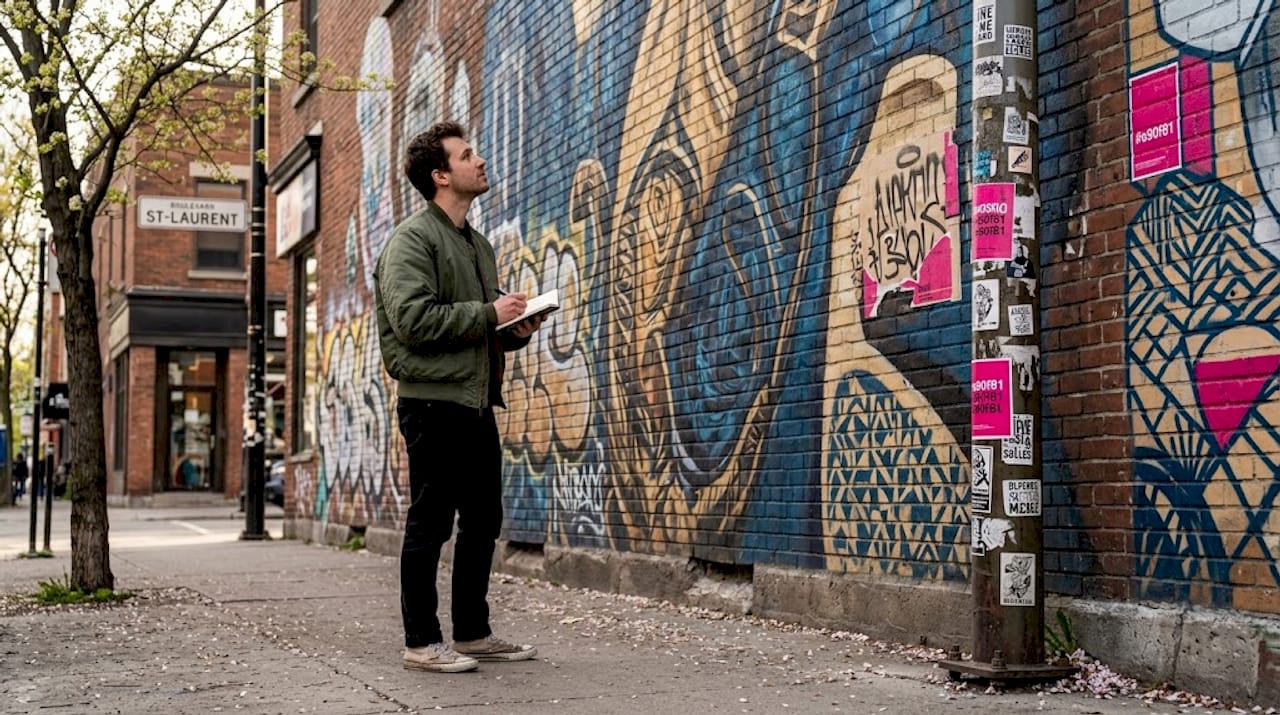
Pro Tip: Limit your theme to one or two clear ideas. A walk about “murals and feminist art and jazz history and food culture” is actually a walk about nothing. Specificity creates meaning.
Step-by-step guide: Planning your Montreal art walk
Once you have your theme, mapping out and optimizing your art walk route is the next step.
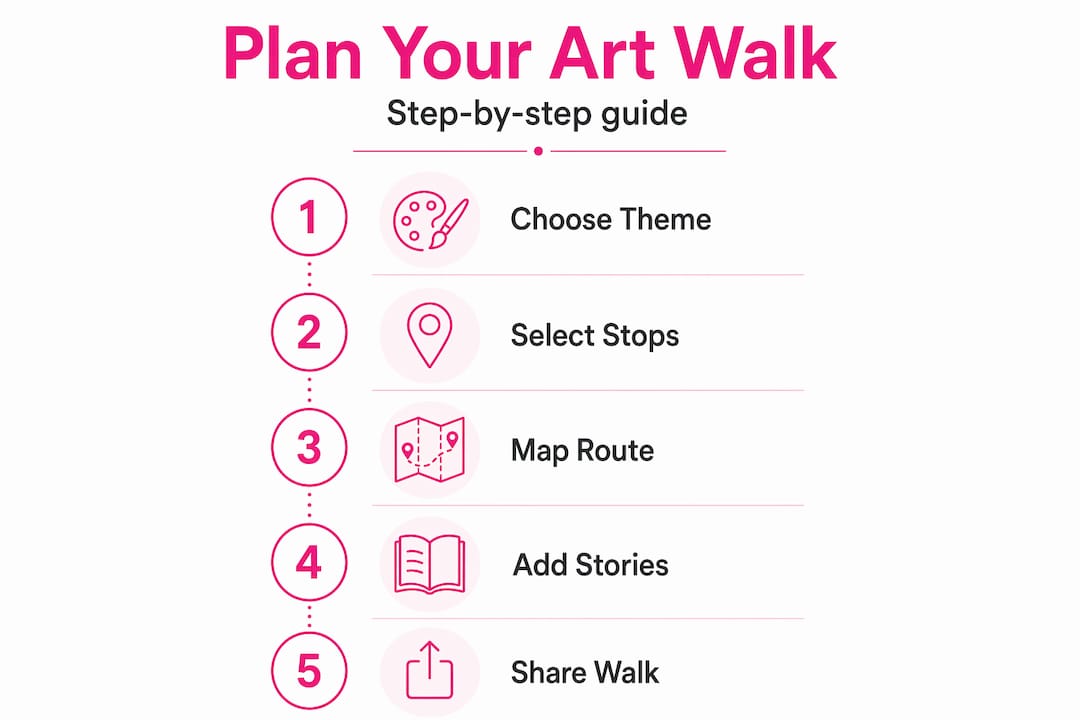
Research consistently shows that walkable art routes of 1.5 to 3 miles with 6 to 10 stops and roughly 10 to 15 minutes per stop hit the sweet spot for engagement and enjoyment. That translates to about two to four hours of total experience, which is enough to feel immersed without crossing into exhaustion.
Here’s how to build your route step by step:
- Choose your anchor landmarks. Pick two or three “hero” stops that anchor the walk. These are the pieces you’re most excited to share. Everything else supports them.
- Map a logical geographic flow. Avoid backtracking at all costs. A zigzag route kills momentum and energy. Use Google My Maps to plot stops in sequence before committing.
- Add buffer stops. Identify two or three secondary stops that can be skipped if time runs short or added if the group wants more.
- Mark rest and break points. Every 45 minutes or so, build in a natural pause. A bench, a café, a park. Effective tours average under 90 minutes of walking time, with satisfaction driven more by landscape quality than sheer volume of stops.
- Download offline maps. Save the route before you leave. Test it the day before if possible.
- Add gamification. Build in a small puzzle or challenge at one or two stops. Ask participants to find a hidden detail in a mural, or guess the year a sculpture was installed. It sounds simple, but it dramatically boosts engagement.
For inspiration on what’s currently showing in the city, our current art exhibits guide is updated regularly and can help you tie indoor gallery visits to your outdoor walk.
“The best self-guided tours feel like a conversation, not a lecture. They invite you to look, wonder, and wander at your own pace.”
Enrich the experience: Stories, history, and interaction
With your route established, it’s time to add color and personality to each stop for a memorable experience.
A stop without context is just an object. A stop with a story is an encounter. For each artwork on your route, prepare a short narrative: who made it, when, why it exists here, and what it means in the context of the neighborhood. Keep each narrative under three minutes whether read aloud or listened to via audio, and include at least one surprising or personal detail about the artist. People remember the human behind the work far longer than they remember the work itself.
Here’s how to layer in richness:
- Write a two to three sentence story for each stop. Include the artist’s name, the year, and one unexpected fact.
- Record optional audio clips. Even a simple voice memo recorded on your phone adds intimacy and depth for groups.
- Integrate neighborhood texture. A great art walk blends public art with neighborhood immersion, including the cafés, parks, and local history that give context to the art. Art doesn’t exist in a vacuum, and neither should your walk.
- Create Instagram moments. Identify two or three stops where the composition, light, or scale makes for a genuinely striking photo. Share the spots with your group in advance to build anticipation.
Our guide to Montreal café escapes is a great resource for identifying the perfect mid-walk stop that doubles as a cultural experience in its own right.
Pro Tip: Record a short voice note at each stop during your scouting walk. These raw impressions often become the most authentic and compelling stories you’ll share with others.
Why most Montreal art walks fall flat—and how yours can be different
Here’s something most planning guides won’t tell you: the biggest enemy of a great art walk isn’t a bad neighborhood or a rainy day. It’s ambition without editing.
Most DIY art walks fail because the creator tries to include everything. Every mural, every sculpture, every historically significant corner. The result is a walk that zigzags across neighborhoods, exhausts participants before the halfway point, and leaves everyone feeling vaguely overwhelmed rather than genuinely moved.
Route logic and user pacing matter far more than exhaustive content. A walk with eight perfectly chosen stops, each with a clear story and a natural flow between them, will always outperform a walk with twenty stops crammed into an impossible loop.
The other mistake is treating the walk as a performance rather than a conversation. The best art walks we’ve experienced in Montreal feel personal. They reflect the curator’s genuine enthusiasm, their specific obsessions, their willingness to say “this one matters to me because…” That kind of honesty is contagious. It turns a group of polite observers into genuinely curious participants.
Design your walk the way you’d design a dinner party playlist: with intention, with a sense of pacing, and with the courage to leave out the songs that don’t fit just because you love them.
Take your Montreal art walk further
Designing your own art walk is one of the most rewarding ways to experience this city, but the adventure doesn’t have to stop when you get home. Best Kept MTL curates the best of Montreal’s art and culture scene every week, so you always know what’s worth your time. Explore our picks for top Montreal art exhibits to find gallery stops worth weaving into your next route. If you want to go deeper into the contemporary art world, our coverage of PLURAL 2026 gives you an insider look at Canada’s most exciting art fair. And when your feet need a rest, our list of cozy Montréal cafés has you covered with the perfect places to reflect, recharge, and plan your next walk.
Frequently asked questions
What is the ideal length for a Montreal art walk?
The best routes are 1.5 to 3 miles long, last about two to four hours, and include 6 to 12 stops with built-in time for breaks and photos.
How can I make my art walk accessible for everyone?
Use mapping tools with accessibility filters and plan routes that are wheelchair-friendly, with visual landmark directions rather than relying solely on street names.
Are there pre-made resources to help plan my walk?
Yes, Art Public Montréal’s interactive map provides ready-to-go self-guided tours and a searchable database of hundreds of public artworks across the city.
Should I include cafés or historical sites in my art walk?
Absolutely. Blending public art with neighborhood immersion, including cafés and heritage sites, creates a far richer and more memorable experience than art alone.