TL;DR:
- Montreal’s Art Deco heritage is primarily expressed through interiors of cinemas, department stores, and luxury retail spaces rather than skyline towers. Many of these spaces, like Le Château Cinema and Le 9e, showcase authentic geometric ornamentation, contrast materials, and vertical emphasis, reflecting the interwar stylistic blend of Deco and streamlined modernism. Using heritage inventories and recognizing interior details help enthusiasts verify and curate a genuine Deco experience beyond superficial facades.
Most people assume Montreal’s Art Deco story plays out on the skyline. A few towers here, a bold facade there. But that assumption misses the richest part of the picture entirely. Some of the city’s most breathtaking Deco work is tucked inside cinemas, department stores, and luxury retail spaces that most visitors walk right past. If you’ve ever wanted to see Montreal through the eyes of a true architecture enthusiast, this guide will show you exactly where to look, what to look for, and how to tell the real thing from a stylistic imitation.
Table of Contents
- Understanding Art Deco’s place in Montreal
- Iconic Art Deco landmarks and interiors
- How to identify authentic Art Deco sites
- Building your Art Deco itinerary: Insider tips
- Why Montreal’s Art Deco story is more than a skyline
- Take your Montreal Art Deco discovery further
- Frequently asked questions
Key Takeaways
| Point | Details |
|---|---|
| Focus on interiors | Montreal’s most authentic Art Deco sites are found inside cinemas, restaurants, and department stores. |
| Verify with heritage sources | Use official inventories and architectural recognition to guide your exploration of Deco landmarks. |
| Blend of styles | Montreal Deco buildings often combine classic Deco with 1930s streamlined modernism. |
| Itinerary tips | Prioritize recently restored sites like Le 9e and best-preserved halls like Le Château Cinema. |
| Look beyond the skyline | Department store interiors and entertainment venues often reveal the richest Art Deco history. |
Understanding Art Deco’s place in Montreal
Montreal’s relationship with Art Deco is deeply tied to the interwar period, roughly the 1920s through the late 1930s. This was a time of optimism, economic ambition, and a hunger for modernity. Cities across North America were racing to express prosperity through bold geometry, lavish ornamentation, and a sense of forward momentum frozen in stone and plaster.
In Montreal, that impulse took a distinctive shape. The city’s Deco movement often blended with streamlined 1930s modernism, a slightly later current that favored smoother surfaces, horizontal lines, and a more restrained elegance. Understanding this blend matters because it explains why some Montreal buildings feel more sober than the flamboyant Deco you might associate with New York or Miami.
“Montreal’s Art Deco period is best understood not as a single unified style but as a layered conversation between ornamental Deco and the cleaner lines of streamlined modernism, both of which shaped the city’s commercial and entertainment spaces.”
The building types that carry the most authentic Deco character in Montreal include entertainment halls, commercial interiors, and luxury retail spaces. These weren’t just functional spaces. They were statements. Developers and architects wanted patrons to feel they were stepping into something elevated, something modern.
Key examples that illustrate this perfectly:
- Le Château Cinema, built in 1931, stands as one of the city’s rare surviving Deco entertainment halls
- Le 9e, the former Eaton’s department-store restaurant, recently restored and reopened, showcases how Deco design transformed commercial dining into a theatrical experience
- Luxury retail corridors from the same era, many of which still retain original detailing if you know where to look
Montreal’s terraces and urban style also carry traces of this interwar aesthetic, particularly in neighborhoods where commercial architecture from the 1930s has been preserved rather than replaced.
Iconic Art Deco landmarks and interiors
With that historical foundation in place, let’s talk about the buildings themselves. The distinction between exterior and interior Deco is crucial here, and it’s one that even seasoned architecture lovers sometimes overlook.
Montreal’s notable Art Deco landmarks include preserved entertainment and commercial interiors such as Le Château Cinema and the former Eaton’s Le 9e space. Both are celebrated not primarily for their street-facing facades but for what waits inside.
| Site | Built | Deco focus | Current status |
|---|---|---|---|
| Le Château Cinema | 1931 | Interior and exterior entertainment hall | Preserved, recognized heritage |
| Le 9e (former Eaton’s) | 1930s | Interior restaurant and retail | Reopened May 2024 after restoration |
Le Château Cinema is described as one of the three best-preserved neighborhood palaces in Montreal. Walking into a space like this feels like stepping through a portal. The geometry is precise, the ornamentation is deliberate, and every surface seems to have been designed with intention. It’s the kind of place that makes you slow down.
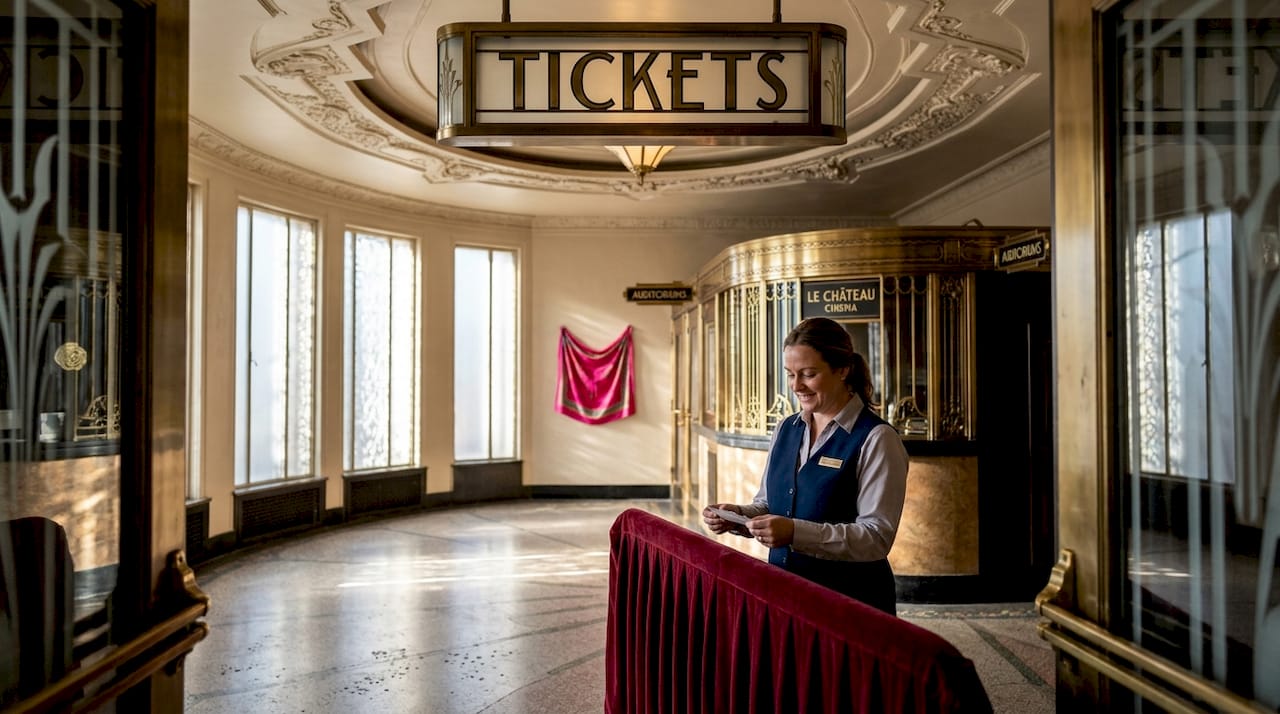
Le 9e is a different kind of revelation. As a heritage-recognized interior, sources describe it as an “important and remarkably authentic example” of Art Deco interior architecture. Its reopening in May 2024 after a careful restoration brought back details that had been obscured or altered over decades. The result is a space that feels genuinely of its era without feeling like a museum piece.
Here’s what to look for when you visit either site:
- Geometric ornamentation: sunburst motifs, chevrons, stepped forms
- Contrast materials: polished metals against matte stone or painted surfaces
- Vertical emphasis: tall proportions that draw the eye upward
- Stylized natural forms: flora and fauna rendered in angular, abstracted ways
Pro Tip: Visit Le 9e during a quieter weekday morning if you want to absorb the interior details without crowds. The light at that hour catches the metalwork beautifully.
The sensory experiences these spaces offer go well beyond visual pleasure. There’s a tactile quality to Deco interiors, a richness in the materials that you feel as much as see. And Montreal’s restaurant interiors in general carry a strong design consciousness that traces its roots, in part, to this very tradition.
How to identify authentic Art Deco sites
After discovering which buildings stand out, it’s worth knowing how to verify and curate your own Art Deco itinerary. Not every building labeled “Art Deco” online deserves the title. Some are streamlined modern. Some are Art Moderne. Some are simply old.
A practical benchmark for enthusiasts is using authoritative heritage inventories like Héritage Montréal’s Memento entries alongside tourism and architectural recognition sources, rather than relying solely on casual lists. Memento is particularly valuable because it documents not just the style but the significance, the history, and the current condition of each site.
Here’s a step-by-step approach for building a verified Deco itinerary:
- Start with Héritage Montréal’s Memento database. Search for buildings tagged with Art Deco or interwar period classifications. These entries include photographs, dates, and heritage status.
- Cross-reference with Tourisme Montréal resources. Their architectural walking guides connect recognized sites to neighborhood context, making it easier to plan a logical route.
- Look for documented restoration history. Sites that have been formally restored, like Le 9e, are more likely to retain authentic details than those that have been casually “preserved.”
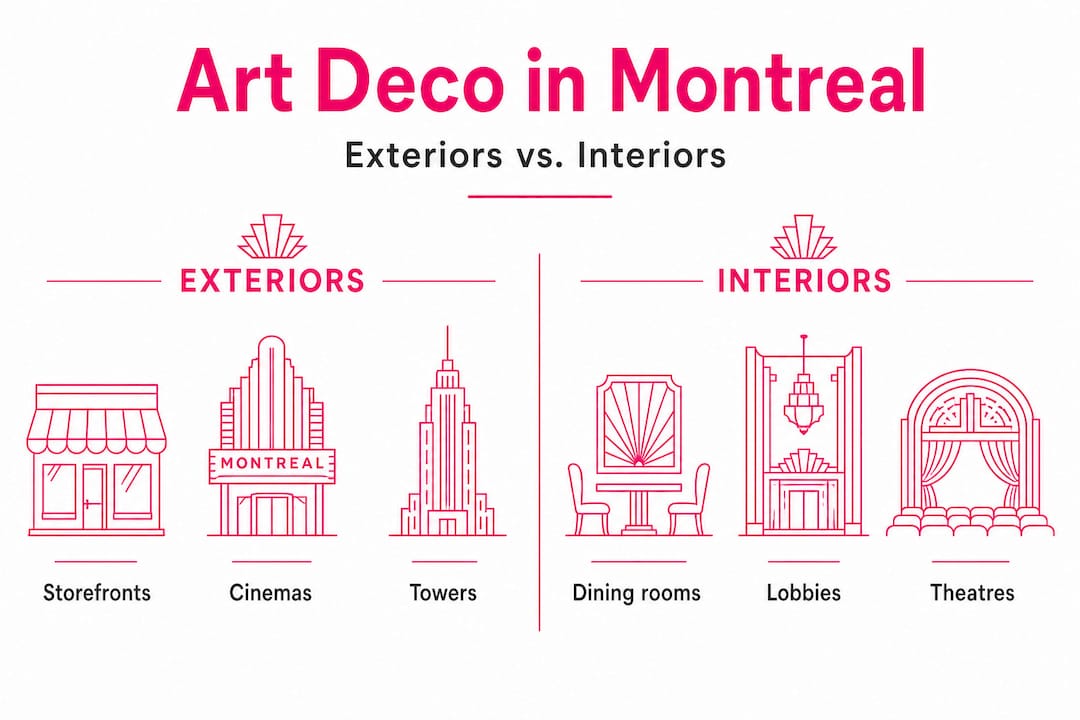
- Distinguish interior from exterior Deco. Ask yourself: is the recognition based on the facade, the interior, or both? This shapes how you visit and what you prioritize.
- Check for architectural awards or citations. Formal recognition from heritage bodies adds credibility to a site’s Deco classification.
| Verification source | What it tells you | Best used for |
|---|---|---|
| Héritage Montréal Memento | Heritage status, history, photos | Confirming authenticity |
| Tourisme Montréal guides | Neighborhood context, routes | Planning a walking itinerary |
| Architectural publications | Style analysis, comparisons | Understanding design details |
Pro Tip: Montreal’s art and history coverage on Best Kept MTL is a great companion resource for connecting architectural sites to the broader cultural scene. You’ll often find that a Deco building sits near a gallery, a restaurant, or a boutique worth visiting on the same trip.
Montreal’s fashion and decor influence also reflects the city’s deep design heritage, and understanding the Deco period helps you see those connections more clearly.
Building your Art Deco itinerary: Insider tips
Now let’s turn theory into practice. The biggest mistake most visitors make when exploring Montreal’s Deco landscape is spending too much time looking up at facades and not enough time going inside. The real magic is interior.
Montreal’s Art Deco story is told through specific building types: department-store interiors, entertainment halls, and luxury retail spaces rather than just skyline towers. Keep that framing in mind as you plan.
Here’s how to build an itinerary that actually delivers:
- Prioritize interiors above all else. Book a table at Le 9e. Attend a screening at Le Château Cinema. Get inside these spaces rather than photographing them from the street.
- Avoid the skyline-only trap. Tall commercial towers from the 1930s often blend Deco with other styles. They’re interesting, but they’re not where the purest Deco experience lives.
- Include recently restored sites. Restoration work done in the last decade tends to be more accurate and more visually rewarding than sites that were “preserved” casually decades ago.
- Watch for Deco versus streamlined modern confusion. Streamlined modern buildings favor smooth curves and minimal ornament. Deco buildings favor geometric ornament, vertical emphasis, and rich surface detail. They’re related but distinct.
- Plan neighborhood clusters. Several Deco sites sit within walking distance of each other in the downtown core. Clustering your visits saves time and creates a more immersive experience.
Pro Tip: Pair your Deco itinerary with a stop at a Marcus Hotel brunch for a design-conscious dining experience that echoes the era’s love of theatrical interiors. And if you’re planning a longer stay, check Montreal holiday plans for curated seasonal programming that often includes cultural and architectural events.
Why Montreal’s Art Deco story is more than a skyline
Here’s the contrarian take that most guides won’t give you: Montreal’s Deco legacy is not a skyline story. It never was. The towers get the attention because they’re visible, because they photograph well, because they’re easy to point at. But the soul of Montreal’s Art Deco period lives in commercial interiors and entertainment spaces, in the places where ordinary people went to feel extraordinary.
The real Art Deco narrative runs through department-store restaurants, neighborhood cinemas, and luxury retail corridors. These were the spaces where Deco’s promise of modernity and glamour was actually delivered to everyday Montrealers. A factory worker couldn’t afford to live in a Deco tower. But they could walk into Le 9e for lunch and feel, for an hour, like the city was built for them too.
That’s a powerful thing. And it means that the most meaningful Deco experiences in Montreal are also the most democratic ones. They’re in spaces designed for use, not just admiration. When you visit Montreal’s art and nightlife scene today, you’re participating in a tradition that stretches back to those interwar years, when design was understood as something that should elevate daily life, not just decorate it.
Most guides miss this entirely. They hand you a list of towers and call it a day. Real enthusiasts know better.
Take your Montreal Art Deco discovery further
Your Art Deco exploration is just the beginning of what Montreal has to offer. The city’s architectural heritage is woven into its luxury living scene, its cultural calendar, and its most distinctive neighborhoods. If the design sensibility of the Deco era speaks to you, you’ll find echoes of it in spaces like Solstice Montreal, where contemporary luxury draws on the city’s tradition of elevated design. Or explore The Onyx in Griffintown, a residence that brings that same sense of refined, intentional living into a modern context. Have questions about Montreal’s cultural landscape or want personalized recommendations? Reach out to us and we’ll point you toward the hidden gems that make this city endlessly worth exploring.
Frequently asked questions
What is the best way to find authentic Art Deco architecture in Montreal?
Consult authoritative heritage inventories like Héritage Montréal’s Memento entries and tour sites with documented recognition, rather than relying on casual online lists or general travel guides.
Are Art Deco sites in Montreal mostly interiors or exteriors?
Most notable Art Deco sites in Montreal are recognized for their interiors, especially entertainment halls and department stores, so plan your visits around gaining access to the inside of these buildings.
Which Montreal Art Deco site was recently restored?
Le 9e, the former Eaton’s department-store restaurant, officially reopened in May 2024 after a major restoration that brought its Art Deco décor and layout back to remarkable authenticity.
Why is Le Château Cinema significant in Montreal’s Art Deco landscape?
Le Château Cinema is a rare Art Deco entertainment hall built in 1931 and recognized as one of the three best-preserved neighborhood palaces in the city, making it essential for any serious Deco itinerary.