

Montreal has always understood something the rest of the luxury world is only now catching up to: the most memorable experiences aren’t purchased, they’re felt. What is cultural luxury? It’s the shift from collecting expensive objects to inhabiting meaningful worlds, from showing off to truly belonging. For Montrealers and luxury travelers exploring Quebec, this distinction isn’t abstract. It’s the difference between a meal and a journey, between a hotel room and an immersion. This guide breaks down exactly what cultural luxury means, why it matters, and where you can find it right here.
Table of Contents
- The cultural turn in luxury: more than just opulence
- Cultural authority: what distinguishes true cultural luxury
- Experiencing cultural luxury in Quebec: art, dining, and hospitality
- Beyond money: cultural and social capital in accessing cultural luxury
- How to seek and appreciate cultural luxury in Quebec
- Why cultural luxury is more about belonging than status
- Discover cultural luxury experiences in Montreal and Quebec
- Frequently asked questions
Key Takeaways
| Point | Details |
|---|---|
| Cultural luxury defined | Luxury now values authenticity, cultural relevance, craftsmanship, and meaningful experiences beyond material wealth. |
| Cultural authority matters | True cultural luxury involves creating immersive worlds and rituals that nurture belonging and signal shared values. |
| Experiential examples | Quebec’s Tanière3 dining and SonoLux art lodging illustrate cultural luxury through storytelling and exclusive access. |
| Capital beyond money | Accessing cultural luxury requires cultural and social capital more than just economic means. |
| Applying cultural luxury | Seek experiences with authentic heritage, slow immersive journeys, and environments inviting genuine participation. |
The cultural turn in luxury: more than just opulence
Luxury used to be a fairly simple equation: spend more, signal more. A logo on a bag, a suite with a view, a wine list that required a sommelier and a budget. But that era is fading fast. Today, cultural luxury reflects a broader shift where meaning, authenticity, heritage, and craft replace hype as the true measures of value.
“Cultural luxury is part of a broader shift where luxury must offer lasting meaning rooted in authenticity, heritage, and craft rather than relying on hype alone.” — IFOP Group
This isn’t just a philosophical pivot. Consumers actively seek experiences that resonate over time. They want to feel something, learn something, carry something home that isn’t in a bag. The luxury culture meaning has expanded to include sensory richness, historical depth, and the kind of presence that a fast-paced, trend-chasing world rarely offers.
What does understanding cultural luxury look like in practice? Consider these pillars:
- Authenticity: The experience or object is rooted in genuine tradition, not a manufactured version of it
- Craftsmanship: Skill and time are evident, and you can feel the intention behind every detail
- Sustainability: Cultural luxury respects heritage, environment, and community rather than extracting from them
- Slow presence: The experience rewards your attention. It’s designed to be savored, not rushed
The digital era has, paradoxically, made this easier to identify. When everything is available and everything trends, the genuinely rare stands out. Cultural luxury trends are moving toward what some call “slow luxury,” where under-consumption and mindful presence are more desirable than accumulation. You can see this play out in immersive experiences in Montreal, where the goal is depth, not spectacle.
Cultural authority: what distinguishes true cultural luxury
The definition of cultural luxury gets sharper when you introduce one key concept: cultural authority. This is the ability of a place, brand, or experience to shape taste, communicate values, and make you feel that entering this world is something earned, not just bought.
“Cultural luxury is best understood as luxury’s ‘cultural authority,’ creating belonging through immersive environments, rituals, and moments of access.” — Luxury Daily
Cultural authority is what separates a beautifully decorated restaurant from one that actually moves you. It’s the difference between a museum gift shop and the museum itself. Here’s how cultural authority shows up in real cultural luxury experiences:
- The environment tells a coherent story. Every detail, the lighting, the materials, the music, the staff’s knowledge, reinforces a single emotional world
- Rituals are present and intentional. A welcome ceremony, a particular sequence of courses, a dress code with meaning, these aren’t arbitrary. They signal that you’re entering something with a history
- Access feels earned, not purchased. You’re invited into a cultural conversation, not just a transaction
- The “soul of the house” is visible. There’s no gimmick, no trend-chasing. The essential character of the place is consistent and clear
This framework overlaps heavily with what great museums do. They act as stewards of legacy, shapers of perception, and creators of ritual. Luxury, at its most culturally resonant, does the same. Explore Montreal heritage signs for a street-level encounter with exactly this kind of layered cultural storytelling, or seek out Montreal immersive experiences that put you inside a world rather than just in front of one.
Experiencing cultural luxury in Quebec: art, dining, and hospitality
Quebec is, quietly, one of the best places in the world to experience cultural luxury. The province has a fierce relationship with its own terroir, its own language, its own artistic tradition. That intensity produces experiences that are genuinely rare.
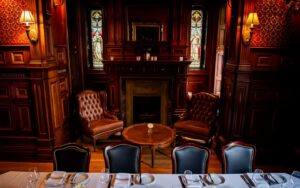
Tanière3 in Quebec City is the clearest proof. Tanière3 offers an immersive fine-dining experience set inside 17th-century vaulted stone cellars, accessed through a secret code. The tasting menu runs 12 to 18 courses, each one a chapter in Quebec’s culinary and cultural story, built around local terroir and masterful storytelling. You’re not just eating dinner. You’re reading a place.
SonoLux in Old Montreal represents the hospitality side of the equation. SonoLux, opening fall 2025, combines immersive art exhibitions with luxury lodging and dining, offering curated cultural programming and creative menus that shift in dialogue with the art on display. It’s a living, breathing example of what cultural luxury in design looks like when it’s done without compromise.
| Experience | Location | Cultural luxury element | What sets it apart |
|---|---|---|---|
| Tanière3 | Quebec City | Terroir storytelling, secret access ritual | 17th-century vaults, 12-18 course sensory journey |
| SonoLux | Old Montreal | Art-driven hospitality, curated programs | Immersive art meets luxury lodging and dining |
- Both prioritize pacing over speed
- Both are built around exclusivity through experience, not price alone
- Both deliver multi-sensory storytelling as the main event
Pro Tip: When booking Tanière3, reserve well in advance and go without researching the menu too deeply. Let the courses surprise you. That sense of discovery is part of the design.
You can also find the same spirit of cultural luxury in design at the RH Montreal Quebec design gallery or while wandering Old Port Montreal’s cultural spots.
Beyond money: cultural and social capital in accessing cultural luxury
Here’s the part most people miss: cultural luxury isn’t primarily about how much money you have. Sociologist Pierre Bourdieu identified three forms of capital that shape how people engage with culture. All three matter, but not equally.
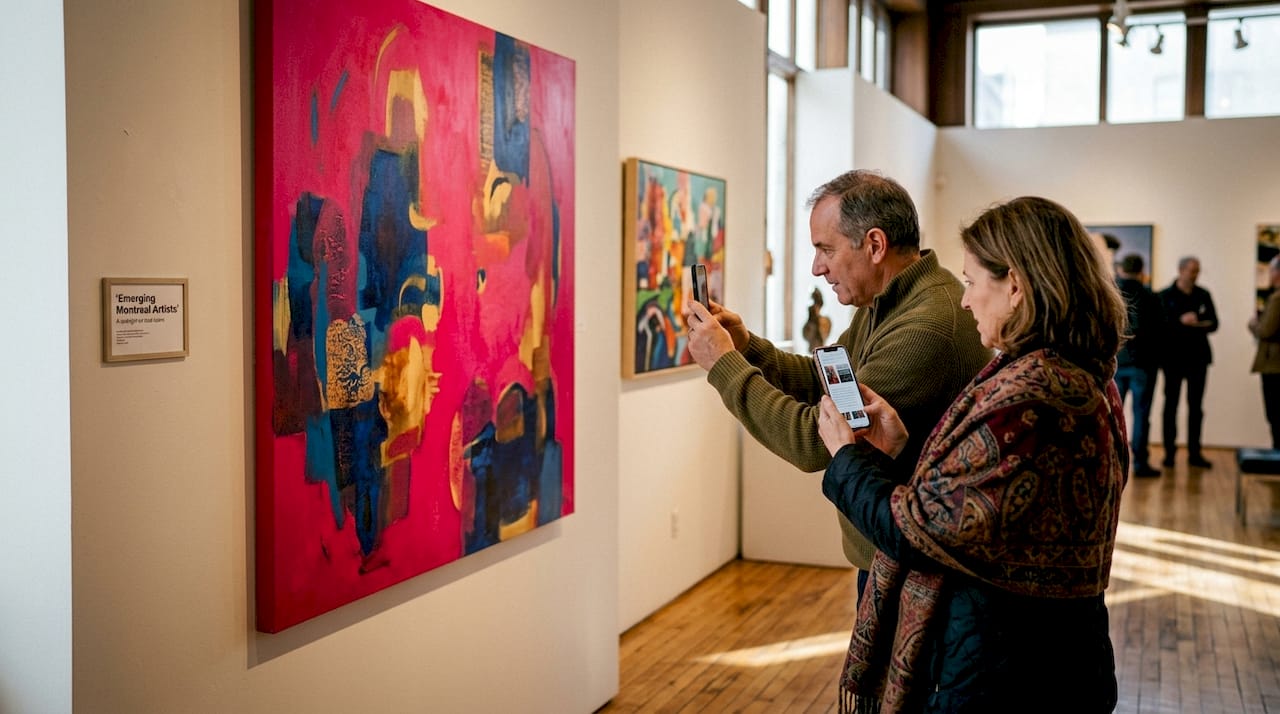
Perusing expensive art at a Montreal art gallery, certainly qualifies as cultural luxury!
Editorial image credit: BKM 2026.
Research confirms that engagement in highbrow cultural experiences depends more on cultural and social capital than on economic capital. Deep knowledge and social networks facilitate genuine appreciation in ways that a credit card simply cannot.
| Capital type | What it is | How it shapes cultural luxury access |
|---|---|---|
| Cultural capital | Knowledge, taste, skills, and competencies | Enables deeper reading of an experience, its references, its craft |
| Social capital | Networks, relationships, and community ties | Opens doors through shared trust, insider access, and collective rituals |
| Economic capital | Financial resources | Enables participation but doesn’t guarantee meaningful engagement |
In plain terms: the person who has spent years learning about Quebec wine, fermentation, and Indigenous food traditions will get far more out of a Tanière3 dinner than someone who simply paid for the table.
This is genuinely good news. You can build cultural capital anywhere. Read about Montreal heritage signs, explore the city’s art scenes, talk to chefs, attend gallery openings. Every layer of knowledge enriches the next experience.
Pro Tip: Before any cultural luxury experience, spend 20 minutes reading about the chef’s influences, the artist’s practice, or the neighborhood’s history. That context transforms what you see, taste, and feel.
How to seek and appreciate cultural luxury in Quebec
Knowing what defines cultural luxury is one thing. Finding it, and actually inhabiting it, takes a bit of intention.
- Follow consistency, not novelty. The best cultural luxury experiences have been doing the same thing, exceptionally well, for years. Avoid anything chasing a trend
- Look for ritual. A reservation process that involves a code, a welcome that includes a story, a menu that follows a particular arc — these signal intentionality
- Prioritize multi-sensory depth. Can you taste, touch, hear, and see the cultural story? The more senses engaged, the more lasting the experience
- Ask who made this and why. Cultural luxury always has an answer. The chef trained in a specific tradition. The artist explored a particular question. The hotel was built to honor a particular heritage
- Slow down. You cannot absorb cultural luxury at a rushed pace. Give yourself time to notice details, ask questions, and sit with what you’re experiencing
According to a Vogue Business analysis, luxury brands behave like cultural players by maintaining consistent authenticity, avoiding gimmicks, and delivering engaging rituals and environments that feel real. That’s your checklist for identifying the genuine article.
- Check whether the experience has a clear point of view, not just a price point
- Notice whether the staff can tell you the story behind what you’re experiencing
- See if the environment rewards lingering, not just passing through
You’ll find these qualities at the city’s best immersive experiences and at Michelin-level dining destinations that treat every course as a cultural statement.
Why cultural luxury is more about belonging than status
Here’s an opinion worth sitting with: the most seductive thing about cultural luxury isn’t the experience itself. It’s the feeling that you belong in a particular cultural world. Not because you bought your way in, but because you showed up with curiosity, knowledge, and genuine attention.
Most luxury content treats cultural authority as something a brand either has or doesn’t have, a fixed credential. But cultural authority must be built and renewed through stewardship, consistency, and authentic communication of values. It can be lost by a single cynical move. That’s what makes it genuinely rare.
For Montrealers, this isn’t abstract philosophy. This city has built real cultural authority through decades of commitment to its arts, its food, its bilingual creative tension, and its refusal to be anyone else. When you step into immersive luxury in Montreal, you’re stepping into that accumulated intention. The belonging you feel isn’t manufactured. It’s earned, by the people who built it and by you for seeking it out.
The conventional view of luxury is still catching up to this truth. Status fades. Belonging doesn’t.
Discover cultural luxury experiences in Montreal and Quebec
Ready to move from understanding to experiencing? Montreal and Quebec are rich with exactly the kind of cultural luxury we’ve been describing throughout this guide. Start with the city’s most celebrated immersive experiences in Montreal, where art and environment merge into something you carry home in your memory. Treat yourself to Michelin star dining in Montreal that frames each course as a cultural act. Catch the latest Montreal art exhibits before the crowds find them. And when you need a slower, quieter kind of cultural warmth, the city’s best cozy cafes in Montreal offer their own brand of unhurried, genuine hospitality.
Frequently asked questions
What does cultural luxury mean?
Cultural luxury means luxury experiences that prioritize authenticity, heritage, craftsmanship, and meaningful cultural relevance over price or rarity alone. As IFOP research shows, it reflects a broader shift away from hype toward lasting meaning.
How is cultural luxury different from traditional luxury?
Traditional luxury often centers on status and material wealth, while cultural luxury roots itself in cultural authority, immersive environments, and a sense of belonging created through rituals and storytelling rather than selling products alone.
Can I experience cultural luxury in Quebec?
Absolutely. Quebec offers world-class cultural luxury through immersive fine dining at Tanière3 in Quebec City, where a secret-code arrival begins a 12 to 18-course sensory journey, and through art-centered hospitality at SonoLux in Old Montreal.
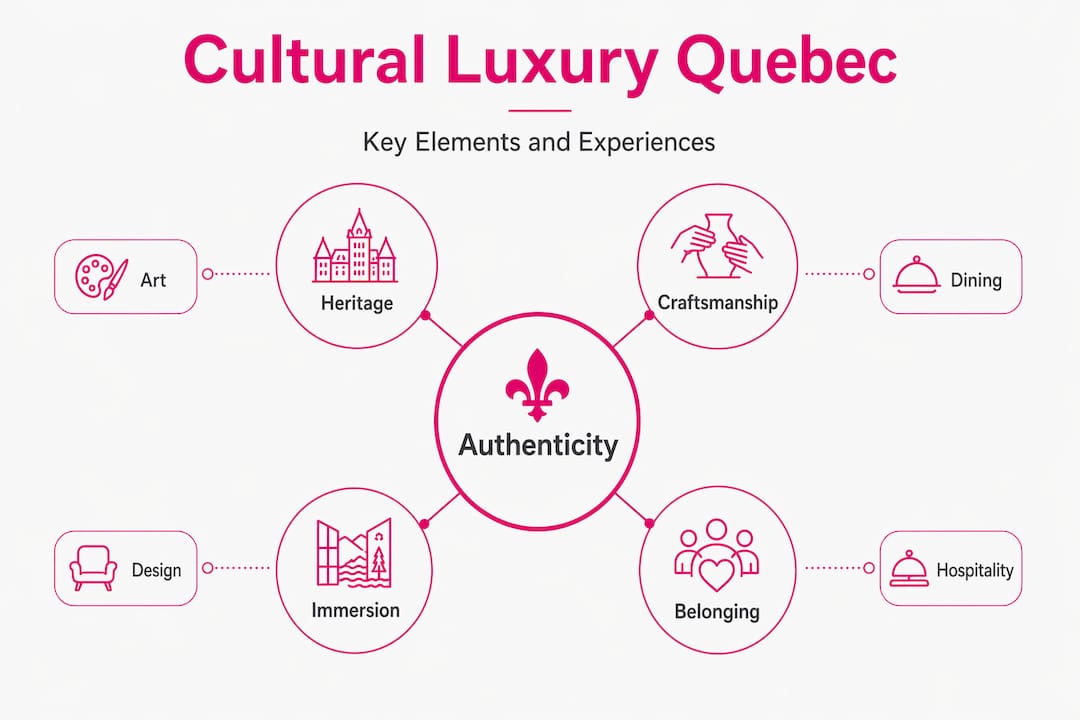
Infographic credit: BKM 2026.
Is cultural luxury only accessible to the very rich?
Not primarily. Cultural and social capital play a stronger role than economic capital in highbrow cultural engagement, meaning genuine knowledge, curiosity, and social connections matter more than your budget.