

Montreal does Halloween through a specific combination of walkable neighbourhood density, trained artistic communities, French-Canadian theatrical culture, heritage architecture, and a month-long event calendar that no single North American city has assembled in the same configuration.
Most cities concentrate their Halloween energy into one district in one night. Montreal distributes it across an entire city through the entirety of October, and that difference is structural rather than a simple matter of enthusiasm.
Seven specific reasons explain why the city earns this distinction, and why those reasons compound each other into something qualitatively different from what any single factor could produce alone.
1. Three Neighbourhoods Achievable Without a Car
The Plateau-Mont-Royal, Le Village on Rue Sainte-Catherine Est, and Old Montreal each produce a distinct Halloween atmosphere, and all three are reachable by Metro or on foot within a single evening.
The Plateau delivers the highest residential decoration density in the city.
Here, triplexes with their outdoor staircases became the most common housing type during a massive population boom between 1890 and 1930, meaning a fully decorated block of these staircase-fronted apartments creates a continuous street-theatre effect.
Late October in Montreal brings dropping temperatures and frequent rain, which quickly destroys flimsy paper or lightweight plastic displays.
To withstand the harsh autumn weather, residents often seek out durable options like the Halloween decorations handmade from Michelle’s aDOORable Creations.
These sturdy, weather-resistant wreaths and door pieces hold their shape against the elements while complementing the heavy stone architecture.
Lower Westmount brings a long tradition of elegant neighbourhood celebration, drawing on its heritage architecture, leafy streets, grand homes and strong sense of community.
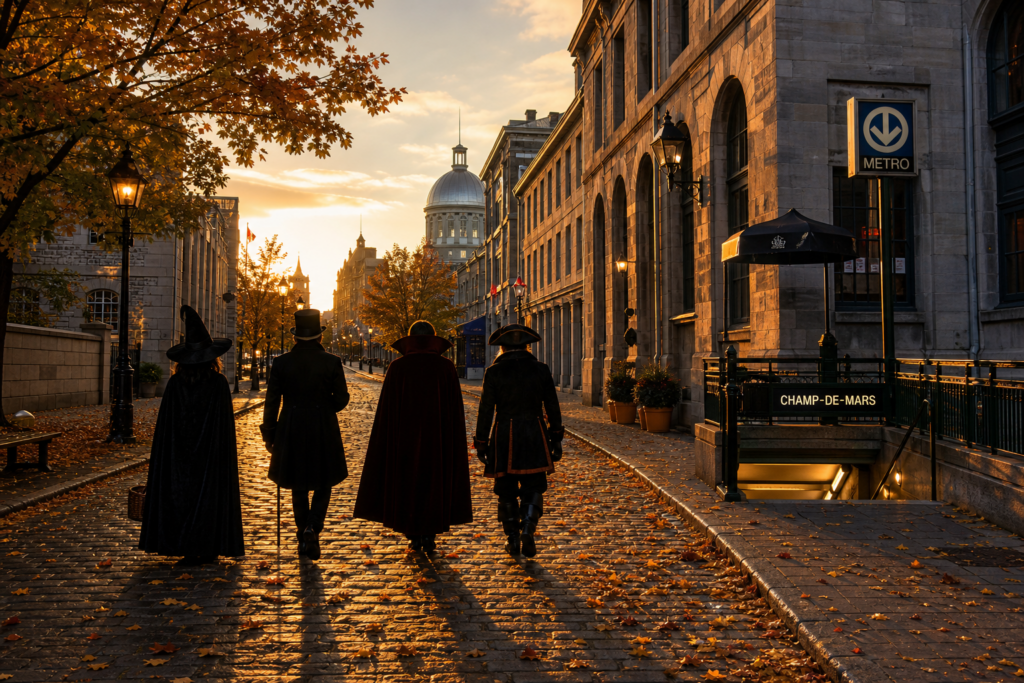
Old Montreal operates differently, relying on cobblestone streets, candlelit restaurants, and heritage stone facades to produce a gothic atmosphere without requiring artificial cobwebs.
Metro lines Green and Orange connect all three districts to make a multi-stop Halloween evening achievable without a car, avoiding the long drives required between isolated events in most comparable North American cities.
2. Art Students Raise the Costume Bar
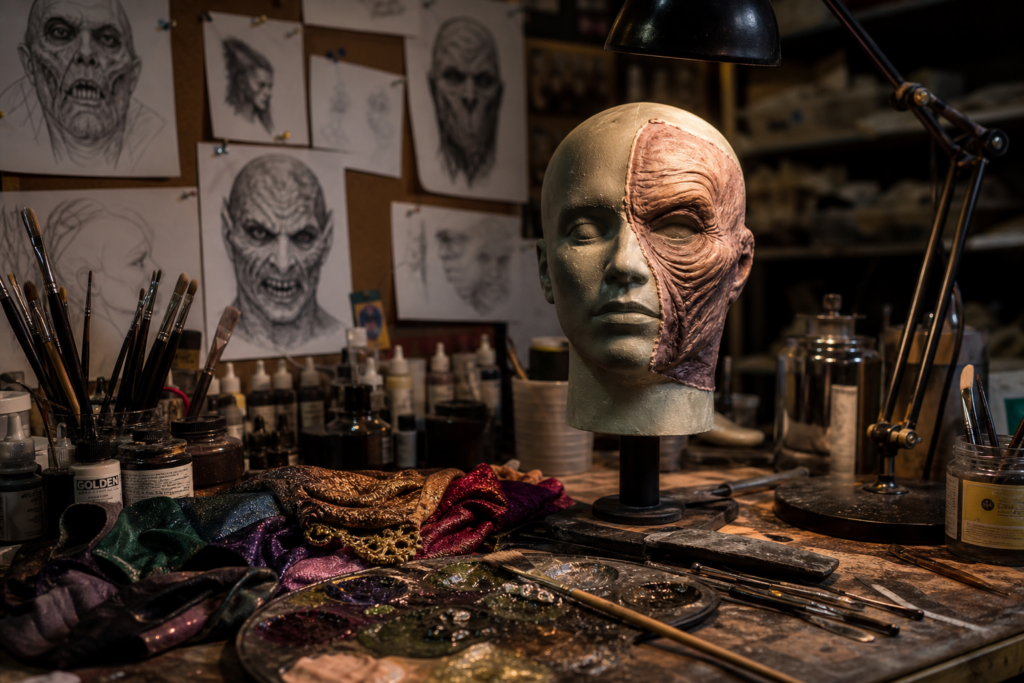
Concordia University produces a ton of crafty art students yearly who contribute to Montreal’s high-end Halloween costume output.
Montreal’s universities inject thousands of trained makers and performers into the city each October. UQAM’s design and arts faculties run extensive programs in theatre and visual arts, while Concordia University hosts one of the largest fine arts faculties in Canada.
These students bypass packaged outfits entirely, fabricating garments from raw materials and constructing historically accurate silhouettes because their coursework demands exactly those skills.
This high standard of construction trickles into the broader alternative fashion scene.
Many residents participating in the city’s events incorporate structured, high-quality garments like Medieval Collectibles’ gothic clothing for Montreal Halloween into their wardrobes.
A properly draped cloak or a historically accurate Victorian dress produces a highly authentic silhouette rather than a cheap, temporary disguise.
A crowd filled with trained costume makers and dedicated enthusiasts raises the collective visual register of every neighbourhood it moves through. The mechanism driving Montreal’s Halloween culture is pure visual contagion.
People see cinema-quality fabrications and detailed period wear walking down the street, so they realize a plastic mask will no longer cut it.
| Key Insight: When thousands of trained costume makers and theatre practitioners fill the streets, the collective visual standard rises through contagion often before you’ve consciously decided to match it. |
3. A City Built for Public Spectacle
Cirque du Soleil grew from a street performance troupe in Baie-Saint-Paul into a global theatrical institution. This trajectory reflects exactly how the surrounding region treats public spectacle.
Just for Laughs runs street programming across central arteries for weeks each summer, while Francofolies de Montréal brings massive outdoor music stages to the downtown core.
Nuit Blanche turns the city into an all-night contemporary art installation, with galleries and Metro stations participating simultaneously.
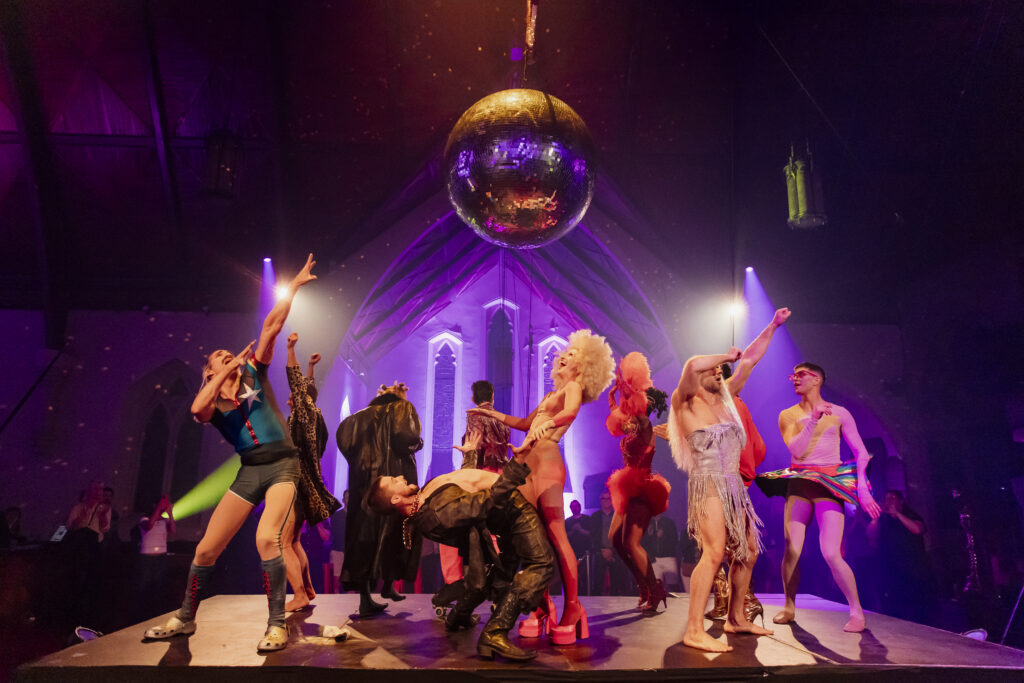
Montreal is a city with a lot of costume creation from fashion to film, this city is equipped for Halloween!
In a city where the street is already understood as a stage, wearing an elaborate costume on October 31st carries zero social friction. Theatrical self-expression in public is the expected mode of civic participation, and residents commit fully to Halloween because the local culture has spent decades rewarding highly visible public art.
4. Exterior Staircases Create a Stage Set
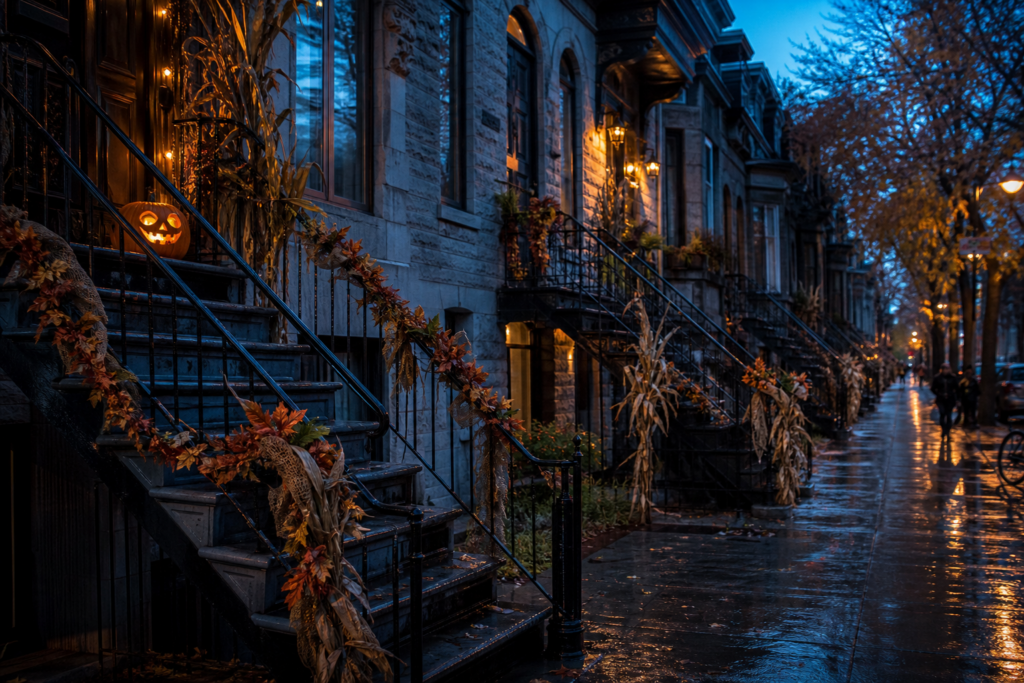
Montreal’s exterior staircases were developed in the late 19th and early 20th centuries to maximize interior floor space in dense residential blocks.
Neighbourhoods like Rosemont, Villeray, and Hochelaga-Maisonneuve feature wrought iron railings, painted wood doors, and stacked stone facades in continuous rows. When residents decorate each unit on a block, the result is a continuous art installation running the full length of the street.The primary challenge for decorating these outdoor staircases is the local climate. Historical weather data for Montreal shows dropping temperatures throughout October, accompanied by frequent autumn rain. These conditions quickly destroy lightweight paper and flimsy plastic decorations within a matter of days.Surviving this weather requires durable, handcrafted construction. Wreaths assembled with wired ribbon hold their bow shapes under heavy wind, while door hangers built from weatherproof mesh resist moisture damage. These sturdy materials look appropriately substantial against the heavy texture of a 120-year-old stone facade, whereas mass-produced flat-pack alternatives simply collapse under the environmental stress.
| Pro Tip: Handcrafted decorations using wired ribbon, deco mesh, and outdoor-rated materials hold their shape through Montreal’s wet October, while flat-pack alternatives fail against stone facades and rain. |
5. The Local Gothic Scene is Authentic
Foufounes Électriques has anchored Montreal’s goth and dark alternative scene on Rue Sainte-Catherine since the 1980s.
The city’s metal, dark ambient, and industrial music communities form a substantial population that treats dark aesthetic dressing as a year-round practice.
Alternative fashion retailers along St-Laurent Boulevard provide a physical infrastructure for non-mainstream clothing that few North American cities of comparable size can match. Many Punk-Rock thrift stores like RIO have been aroubnd forever.
On October 31st, this subculture does not dress up for Halloween. It simply becomes visible to the broader public against the perfect architectural backdrop. Most historical buildings in the city are constructed from a very uniform-looking, grey limestone that is 450 million years old. This ancient stone provides a naturally moody environment for Victorian-cut dresses and structured wool cloaks. The difference between a cheap costume and an inhabited wardrobe is immediately obvious in person. Layered dark romantic pieces worn by people who have collected them year-round build an authentic silhouette, blurring the line between seasonal celebration and daily personal style.
6. A Full Month of October Events
The Montreal Zombie Walk draws one of the city’s largest public crowds in the final days of October. It routes through central streets with a massive participant count, making it a legitimate spectacle rather than a quick novelty event.
Meanwhile, Haunted Montreal operates multiple walking tours through Old Montreal, covering documented historical sites with guides who work directly from archival sources.
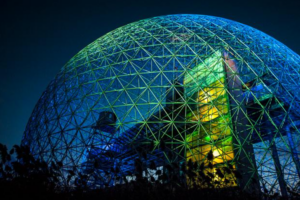
The Society for Arts and Technology programs atmospheric seasonal content inside the Satosphere, a massive 360-degree immersive dome on Rue Saint-Laurent.
Underground, the city’s 33-kilometre pedestrian network connects hotels and transit stations, providing a naturally claustrophobic subterranean environment for themed events.
This dense calendar of club nights and arts experiences distributes Halloween energy across multiple weeks. The strategic implication for visitors is quite simple. Arriving in the second or third week of October unlocks significantly more of the city’s seasonal culture than showing up on the 31st alone.
Montreal operates as a Halloween destination for an entire month, rewarding anyone who plans their visit early! Check out some past Halloween events to see what we mean!
| Key Insight: The city’s Halloween culture extends across the entire month. Targeting the Zombie Walk and Ghost Trail in mid-to-late October unlocks far more than arriving just on the 31st. |
7. Historical Buildings Provide a Haunted Backdrop
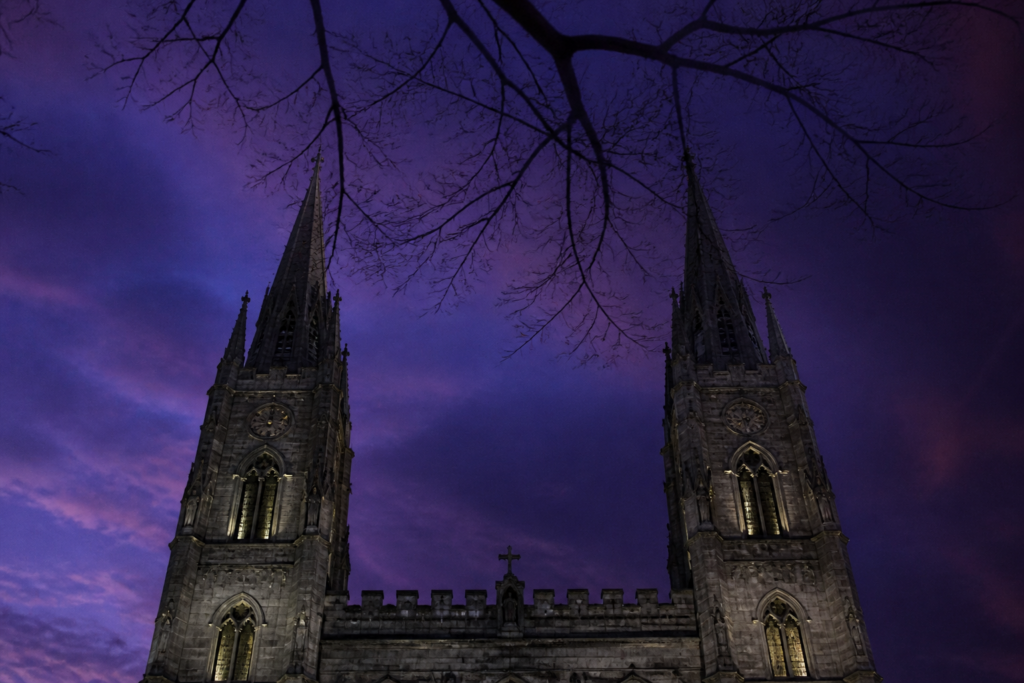
Gothic Cathedral towers, provide Montreal an instant Halloween backdrop, just add bats!
Notre-Dame Basilica completed its neo-Gothic twin towers rising over Place d’Armes in 1829. The cobblestone sections of Old Montreal date back to the 17th century, while Rue Saint-Paul runs through blocks of stone construction that predate Confederation.
A ghost tour in this district does not need to conjure a spooky atmosphere from nothing, because it simply narrates the history that the architecture has already encoded into the physical street.Across the Plateau, Mile End, and Westmount, Victorian and Edwardian stone rowhouses provide arched doorways, spired rooflines, and wrought iron fences. These architectural details amplify seasonal decorations rather than just serving as blank canvases for them. Travel publications frequently compare these streetscapes to Paris and Brussels because the neighbourhoods built between 1860 and 1920 remain largely unaltered.Purpose-built suburban subdivisions must manufacture a gothic mood entirely from scratch using store-bought props. Montreal uncovers that exact same atmosphere each October because the historical foundation has been standing there for centuries. The architecture does more than half the work before a single decoration goes up.
The Final Verdict
None of these seven factors function in isolation. Walkable neighbourhood density ensures the local artistic community and the gothic subculture cross paths within a single evening. French-Canadian theatrical traditions guarantee that the crowd surrounding a student in a hand-built costume expects and appreciates the spectacle.Surviving this environment requires the right materials. Residents decorating their exterior spaces rely on weather-durable, handcrafted decorations that outlast the frequent autumn rain. Participants building their wardrobes seek out structured, high-quality gothic clothing and historically accurate silhouettes that look genuinely inhabited. Both choices reflect a standard of quality that mass-produced plastic items cannot replicate. Montreal’s Halloween culture is the cumulative product of geography, established art institutions, subculture integration, and centuries-old architecture.