

TL;DR:
- Montreal’s local wine scene is experiencing significant growth, with sales increasing over 50% in 2025 and gaining international recognition.
- Supporting local wineries offers rich experiences, from tastings to farm-to-table pairings, that imported wines can’t provide.
Montreal’s local wine scene is quietly becoming one of the most exciting stories in North American viticulture, and most people haven’t heard it yet. Quebec wine sales at the SAQ surged dramatically in 2025, signaling that Montrealers aren’t just curious about local bottles — they’re genuinely hooked. If you’ve been overlooking the local wine shelf, assuming it’s all niche, experimental, or somehow lesser, this guide is about to change your mind. We’ll walk you through the quality, the experiences, and the real reasons why supporting local Montreal wineries is one of the most rewarding choices you can make as a wine lover.
Table of Contents
- The momentum behind Montreal’s local wines
- Quality and recognition: Debunking ‘local is lesser’ myths
- Experience matters: What you get from Montreal wineries
- How to choose local: Not all Montreal wines are equal
- A fresh perspective: Why local Montreal wine is more than a trend
- Next steps: Experience the best of Montreal’s local food and drink scene
- Frequently asked questions
Key Takeaways
| Point | Details |
|---|---|
| Local wine sales are surging | Quebec wines have seen record growth at SAQ, showing rising local demand. |
| Quality matches global standards | Montreal wines regularly win international awards, breaking the myth of lower quality. |
| Experiences enrich the journey | Visiting local wineries offers tastings, pairings, and community that imported wines can’t match. |
| Choose thoughtfully | Styles vary widely; explore different producers and buy direct for the most impact. |
The momentum behind Montreal’s local wines
With sales up and curiosity rising, let’s look at the forces boosting Montreal’s local wine scene.
The numbers are hard to ignore. SAQ Quebec-wine sales increased by 56% between March and August 2025, a figure that reflects genuine appetite, not just novelty. Even more striking, the Conseil des Vins du Québec estimated that SAQ Quebec-wine sales jumped 63% between March 1 and May 20 alone. These are not small fluctuations.
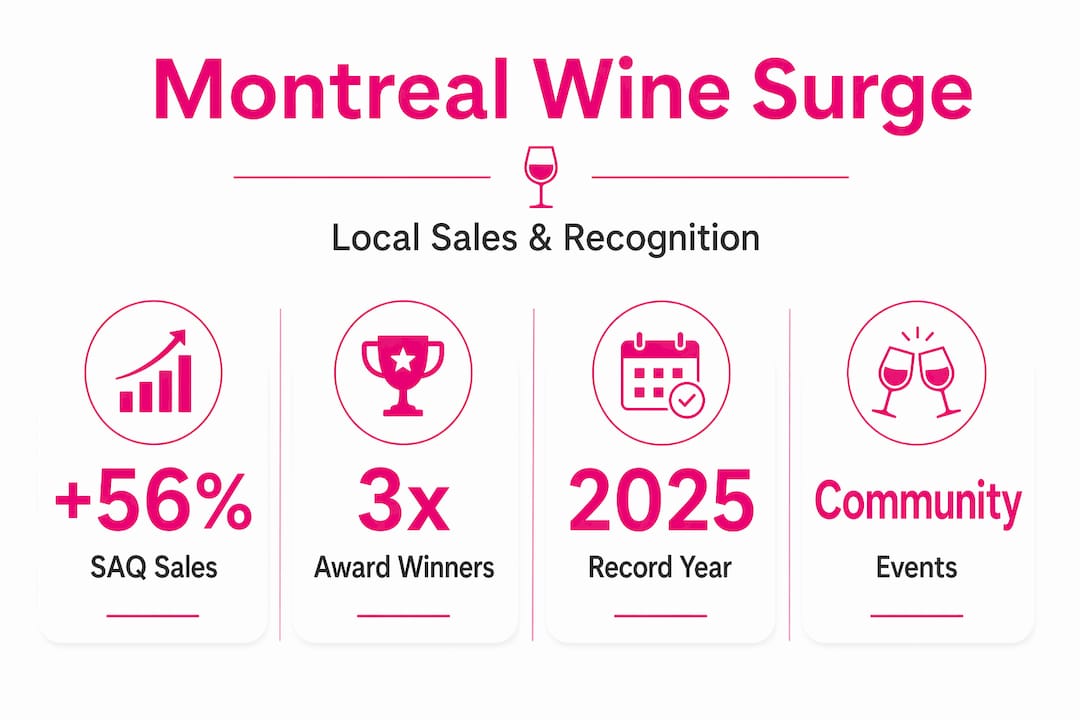
Some of this momentum connects to broader “buy local” and trade-war dynamics, but that doesn’t tell the whole story. Montrealers have been quietly developing a real taste for local bottles over several years. Pandemic-era shifts in consumer behavior, curiosity about regional terroir, and a growing pride in Quebec’s culinary identity have all played a role. The advantages of local Montreal events have always included a deeper connection to place — and now that sensibility is extending to what’s in your glass.
| Year | Quebec Wine SAQ Growth | Key Driver |
|---|---|---|
| 2020 | Steady baseline | Post-Covid buying habits |
| 2023 | Moderate increase | “Buy local” cultural push |
| 2025 | +56% (March to August) | Trade dynamics and taste shifts |
The bottom line: this isn’t a blip. It’s a movement with real staying power.
Quality and recognition: Debunking ‘local is lesser’ myths
Sales spikes are one thing, but what about quality? Time to clear up some persistent myths.
There’s a stubborn assumption that local Quebec wines can’t compete with French Burgundy or Italian Barolo. This perception is outdated and, frankly, unfair. Local producers have been entering international competitions and winning medals that would make any sommelier take notice. For example, Lamont’s wines earned gold at Sélections Mondiales des Vins 2025, one of the most respected international wine competitions held right here in Montreal. That’s a global benchmark, not a local consolation prize.
“Montreal’s wine scene is defined by its producers’ willingness to experiment, adapt, and excel within a challenging climate — and the results speak for themselves.” — Guild of Sommeliers Spotlight
It also helps to understand that Quebec wines are not a monolith. Styles vary widely, from cold-hardy hybrid varieties like Marquette and Frontenac Gris to more delicate vinifera-focused wines grown in the warmest microregions. Hybrid grapes were developed specifically to thrive in cold climates, and skilled producers have transformed that resilience into wines with striking character, often lean and mineral with a freshness that pairs beautifully with Quebec cuisine.
| Wine Style | Grape Type | Flavor Profile | Best Pairing |
|---|---|---|---|
| Marquette red | Hybrid | Dark fruit, earthy | Grilled meats, charcuterie |
| Frontenac Gris white | Hybrid | Citrus, floral | Seafood, fresh cheeses |
| Vidal ice wine | Hybrid | Honey, apricot | Foie gras, desserts |
| Vinifera Chardonnay | Vinifera | Crisp apple, buttery | Roasted chicken, creamy pasta |
For those exploring Montreal natural wine highlights, you’ll also find a vibrant low-intervention movement gaining ground among local producers — wines made with minimal additives and a real respect for the land.
Pro Tip: Ask your SAQ sommelier specifically about award-winning Quebec producers. They often have insider knowledge about new releases that haven’t made it onto mainstream lists yet.
Experience matters: What you get from Montreal wineries
Beyond bottle quality, Montreal wineries offer experiences that imported labels can’t.
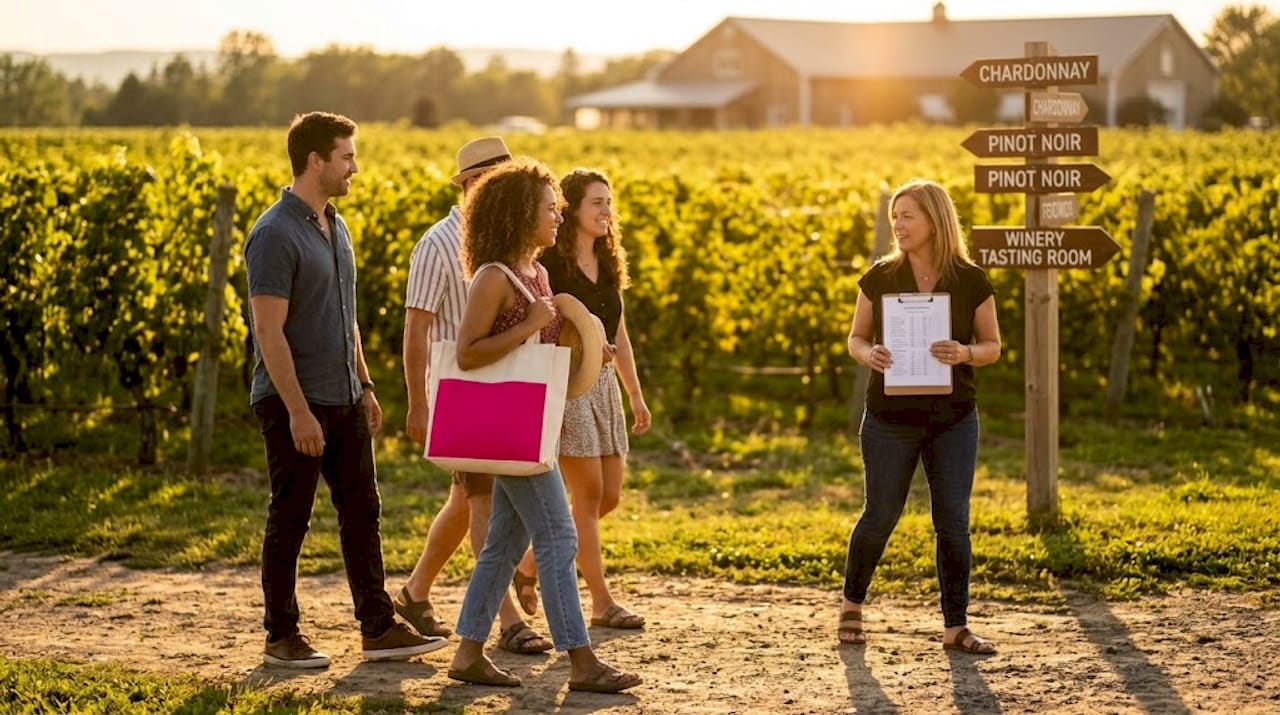
When you buy a bottle of Burgundy, you get the wine. Full stop. When you support a local Montreal winery, you often get an entire world that comes with it. Local wineries offer community-facing experiences including on-site tastings, wine tourism itineraries, and bistro-style pairings featuring authentic Quebec ingredients — things no imported wine retailer can offer you.
Think about what that looks like in practice:
- On-site tastings: You meet the winemaker, walk the vineyard, and taste directly from the barrel. That context transforms how a wine tastes and feels.
- Seasonal wine tourism: Many Quebec wineries offer harvest experiences in autumn that connect you to the land in a visceral way.
- Food and wine pairings: Local producers often collaborate with chefs to pair their wines with regional products like Quebec cheese, smoked meats, and foraged ingredients.
- Community events: Wine festivals, natural wine fairs, and pop-up markets create a social fabric around local drinking culture.
If you want to see this culture in action, Montreal wine tasting events like La Grande Dégustation are perfect entry points. These gatherings bring together dozens of producers under one roof, giving you a fast and festive way to build your personal taste map. For something even more immersive, the city’s sensory food and wine experiences through the summer months blend local gastronomy with outstanding local bottles. And of course, nothing beats sipping a glass of local rosé on one of Montreal’s best terraces as the sun sets over the city.
Pro Tip: Call ahead to smaller wineries near Montreal before visiting. Many offer private tastings for groups of four or more, and these intimate sessions often reveal bottles that never make it onto the public retail shelf.
How to choose local: Not all Montreal wines are equal
Ready to bring home a bottle? Here’s how to confidently explore Montreal’s local wine shelves.
Knowing that local wines are worth your time is one thing. Knowing which ones to grab is another. Here’s a practical framework for navigating your choices:
- Start with award winners. Producers recognized at events like Sélections Mondiales des Vins have already been vetted by international judges. Look for their medals on bottle necks and producer websites.
- Understand grape variety basics. Styles vary widely across Quebec producers, including hybrid versus vinifera approaches. If you love big reds, look for Marquette or Sabrevois. If you prefer crisp whites, seek out Vidal or Frontenac Gris.
- Buy directly from producers when possible. Buying through Quebec channels puts more money directly into the hands of local winemakers compared to broader retail chains. Producer-direct purchases also often include better storytelling and exclusive releases.
- Visit the SAQ with a specific question. Tell the floor staff you want to explore Quebec wines under $30 or above $40. The more specific your request, the better the recommendations.
- Attend local tastings before committing to cases. A $15 tasting flight can save you from buying a full case of something that doesn’t suit your palate — and it often reveals hidden gems you’d never find otherwise.
The diversity here is genuinely thrilling. From sparkling wines made in the traditional method to late-harvest dessert wines that rival Sauternes, Montreal’s winemakers are pushing creative boundaries in every direction.
A fresh perspective: Why local Montreal wine is more than a trend
To sum up, there’s more to Montreal’s “drink local” movement than meets the eye.
Here’s something most coverage gets wrong: the spike in local wine sales isn’t just about trade wars or market disruptions. Those things gave some people a nudge, sure. But local wine enthusiasm rose post-Covid as tastes genuinely shifted toward lighter, fresher profiles — exactly what many Quebec wines deliver. That’s a taste preference change, not a headline reaction.
Montrealers are increasingly defining their identity through what they eat and drink. Choosing a bottle of Rivière du Chêne over a generic imported label is a small but meaningful act of cultural and tasting self-expression. It says you value the story behind the glass, the hands that made it, and the landscape it came from.
The real shift happening here isn’t about nationalism or trends. It’s about connection. When you know your winemaker’s name, when you’ve stood in the vineyard during harvest, when you’ve paired a local Seyval Blanc with a plate of Oka cheese, you’re not just consuming a product. You’re participating in a living, evolving food culture that makes Montreal such a magnetic city. That’s worth far more than the bottle price.
Next steps: Experience the best of Montreal’s local food and drink scene
Looking for more local flavor? Start with these curated experiences.
If this guide has sparked your curiosity, we’ve got you covered. Dive into Montreal’s most exciting food and wine experiences happening this season, from immersive tasting events to chef-driven dinners that celebrate Quebec’s best ingredients. If you’re ready to push the experience even further, explore Montreal’s Michelin-level dining scene, where local wines are increasingly featured alongside nine-course tasting menus. Want personalized recommendations or to share your own local wine discoveries? Reach out to Best Kept Montreal — we love hearing from fellow enthusiasts who are as passionate about this city as we are.
Frequently asked questions
How can I tell if a wine is truly Montreal-made?
Look for clear producer labeling from Quebec wineries and ask for guidance at the SAQ or directly at local winery tasting rooms. Staff at both are usually happy to point you toward genuinely local bottles.
Are Montreal wines available outside of Quebec?
Some Montreal-area wines do reach beyond Quebec, especially award-winning producers gaining international recognition, but the best selection remains at local producers and Quebec SAQ locations.
Do local Montreal wineries host tastings or events year-round?
Many wineries offer community-facing experiences including tastings and seasonal events across multiple seasons. Checking producer websites or your nearest SAQ is the best way to find current schedules.
Has the quality of Montreal wines improved recently?
Absolutely. Local producers have earned real international award recognition at events like Sélections Mondiales des Vins 2025, confirming that Quebec winemaking quality is no longer a local secret.