

Discover how the Réseau express métropolitain is more than just a train—it is a cultural catalyst connecting Montreal’s hidden gems and vibrant neighborhoods, redefining the very rhythm of the city.
The New Pulse: Decoding the REM’s Impact on Montreal’s Urban Fabric
Montreal has always moved to its own beat, but in 2026, that rhythm has a new, electric pulse: the Réseau express métropolitain (REM). This is not just another transit line. It is North America’s most extensive automated light rail system since the Vancouver SkyTrain, a sprawling network of glass, steel, and light designed to weave the city’s disparate regions into a cohesive, interconnected whole. The REM creates a powerful urban synergy, finally linking the South Shore, West Island, and North Shore to the downtown core with unprecedented speed and elegance.
The architectural prowess of the new stations marks a deliberate departure from the city’s subterranean transit past. Where the Metro offered utilitarian charm, the REM delivers light-filled, glass-heavy metropolitan hubs that feel more like modern art galleries than commuter stops. This new infrastructure is fundamentally altering how Montrealers experience their city, fostering a “24-hour” vibe that extends far beyond the core. During major cultural events like Nuit Blanche or the Jazz Festival, the REM becomes a conduit for discovery, moving thousands of culture seekers across the cityscape with seamless efficiency.
Beyond the STM: A New Era of Connectivity
For decades, the Montreal Metro has been the city’s beloved workhorse, its vintage charm an indelible part of the urban identity. The REM, however, represents a new vanguard of automation and design. It’s a sleek, modern counterpoint that prioritizes speed, frequency, and a new kind of commuter experience—a stark contrast to the occasional disruptions of older lines.
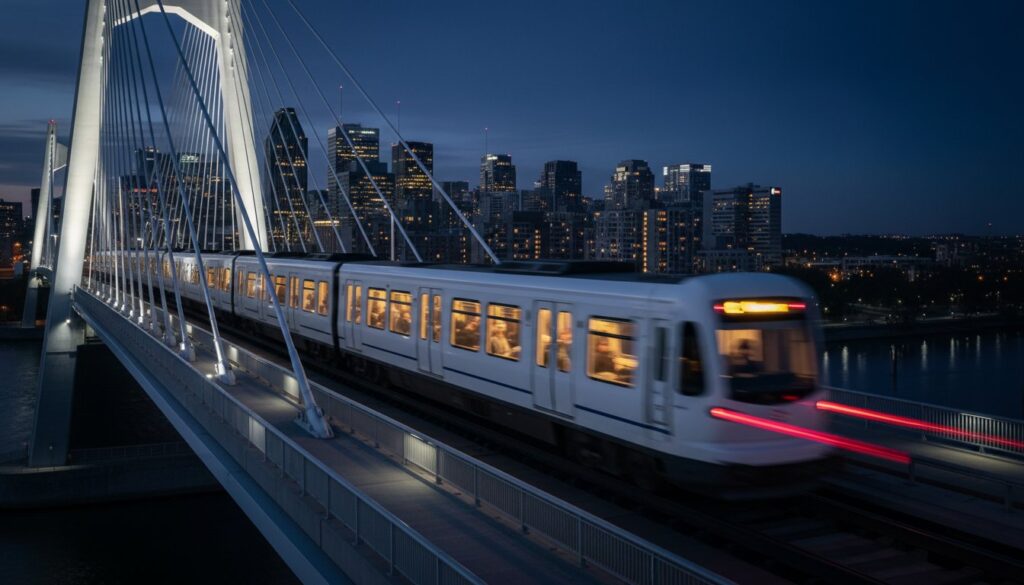
This new era is defined by seamless integration. The REM connects effortlessly with existing transit arteries at Gare Centrale and McGill, creating a unified system that feels both expansive and intuitive. Yet, its most breathtaking feature is arguably the journey itself. As the train glides across the Champlain Bridge, commuters are treated to ethereal, panoramic views of the St. Lawrence River and the city skyline—a daily moment of wonder that transforms a simple trip into a scenic escape.
Transit as a Lifestyle: Curating Your REM-Adjacent Adventures
The REM’s greatest gift to Montreal is the reframing of transit from a daily necessity to a deliberate lifestyle choice. The narrative shifts from “commuting” to “curated exploration.” Suddenly, neighborhoods that once felt a world away are now just a short, scenic ride from downtown. This newfound accessibility is a gateway to discovery, particularly for the South Shore’s burgeoning culinary and boutique scene, which is now an essential part of any urban explorer’s itinerary.
This rapid change inevitably sparks the “gentrification vs. revitalization” debate. The REM acts as an accelerant for neighborhood evolution, and observing this transformation with a sophisticated, nuanced lens is part of understanding the city’s next chapter. More than just a people-mover, the train ride itself offers a rare moment of zen in a fast-paced urban world—a chance to disconnect and watch the cityscape unfold from a new perspective.
Hidden Gems at Every Stop
Every REM station is a potential starting point for a new adventure. Within a five-minute walk of the Brossard terminal lies the luxury retail and dining universe of Quartier DIX30. Future stations in the West Island promise to unlock new canvases for the city’s vibrant art scene.
We propose a new weekend ritual: the “REM Crawl.” Hop on and off to sample diverse cuisines, from the foodie hotspots of Griffintown to the local bistros of the North Shore. It’s a culinary journey made possible by a transit line that connects not just places, but palates.
The Aesthetic of the Automated Journey
For the true wonder seeker, the quintessential REM moment is found at the very front of the train. With no driver, the expansive front window offers a cinematic, forward-facing view of the tracks ahead. It’s a mesmerizing, almost meditative experience as the city rushes toward you. This sensory journey is complemented by the chic minimalism of the rolling stock. The clean lines, muted tones, and thoughtful design of the train cars reflect Montreal’s prestigious status as a UNESCO City of Design, turning every ride into a subtle celebration of form and function.
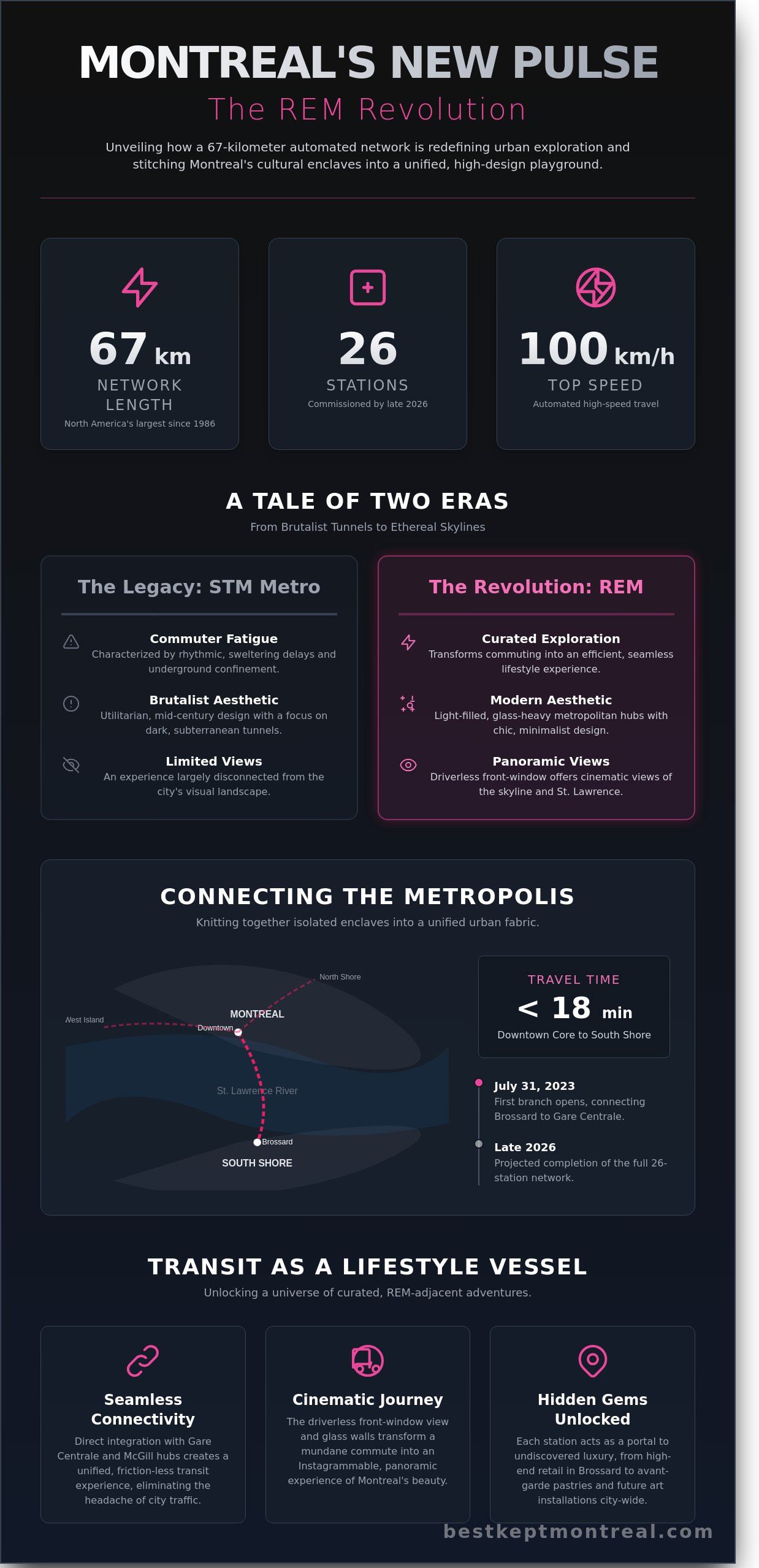
Infographic credit: BKM 2026.
The Future of Connectivity: Why the REM is Montreal’s Greatest Cultural Catalyst
To dismiss the REM as a sterile, corporate project is to miss the point entirely. The system is a canvas for culture, with artistic collaborations and installations integrated into the very fabric of its stations, infusing personality into the automated experience. More profoundly, the REM positions Montreal as a true “City of the Future” by championing a sustainable, eco-conscious vision for urban life. For the modern Montrealer who values environmental stewardship as much as style, choosing the REM is a statement.
By 2026, the long-term impact is clear: the REM is not just changing how we move, but how we live, work, and play. It is a powerful catalyst for cultural exchange, inviting us to step out of our neighborhood bubbles and embrace the new, unified rhythm of a greater, more connected Montreal.
Sustainable Sophistication
The REM’s environmental credentials are as impressive as its design. As a fully electric system, its carbon-reduction impact is a significant step toward a greener urban future. It champions a sophisticated “car-lite” lifestyle, allowing residents to access the far reaches of the metropolitan area without compromising on their commitment to sustainability. This clean, quiet efficiency is the new benchmark for urban luxury. It even makes getting away easier, connecting the city to the airport for those seeking a curated guide to tropical escapes.
A Call to Discovery
This new flow of people creates unprecedented opportunities. For brands, artists, and event organizers, the REM is a ready-made network for reaching a wider, more diverse audience. It’s the perfect infrastructure for planning the city’s next big cultural moment, ensuring attendees from every corner of the region can arrive in style.
For businesses along these new transit corridors, leveraging this new audience effectively is the next big challenge—a hurdle that innovative executive consulting studios like michelboutinstudio can help both start-ups and established organizations overcome.
Want your REM-adjacent business to be the next “Best Kept” secret? Partner with us for a sponsored spotlight.
Frequently Asked Questions
How does the REM differ from the existing Montreal Metro system?
The REM is a fully automated, light-rail system that runs primarily above ground, offering expansive views and higher top speeds. Unlike the Metro, which is concentrated on the Island of Montreal, the REM connects the downtown core to the South Shore, North Shore, and the West Island, significantly expanding the city’s rapid transit footprint.
What are the main REM lines and stations currently in service for 2026?
As of 2026, the REM’s main branch connects Brossard on the South Shore to Gare Centrale downtown. The network has expanded to include the Deux-Montagnes and Anse-à-l’Orme (West Island) branches. The connection to the Pierre Elliott Trudeau International Airport (YUL) is also operational, creating a vital link for travelers.
Can I use my Opus card to ride the REM, and how do fares work?
Yes, the REM is integrated into the regional fare system. You can use your Opus card to pay for your trip. Fares are based on a zonal system (Zones A, B, C, D), so the cost of your trip depends on how many zones you travel through. You can purchase the appropriate fare for your journey at any station.
What is the frequency of the REM during peak hours and late-night events?
The REM is designed for high-frequency service. During peak hours, trains run every 3-4 minutes on the central branch. During off-peak hours and weekends, the frequency is typically every 7-8 minutes. The system also offers extended late-night service, especially during major city festivals, making it a reliable option for getting home after an event.