

The Herbal Code Gin: From Medieval Medicine to Modern Mixology
Among the wide array of distilled spirits, Gin stands out as the most apothecary of them all, a fragrant, herb-laced liquor born not in hedonism, but in healing. Tracing back to an era when alcohol was as much a remedy as it was a pleasure. Let’s time travel back from modern day Hendricks to the middle ages when gin was used to treat the plague!
Gin’s lineage begins in the Middle Ages, when European monks began distilling alcohol to extract the medicinal properties of herbs. At the center of early gin’s formula was juniper, a berry long prized for its antiseptic, anti-inflammatory, and diuretic properties. These monks believed juniper could treat everything from kidney ailments to the plague.
The resulting concoction, a spirit infused with botanicals was not originally meant to be sipped for pleasure, but prescribed. When we have had a long day at the office and a healthy week of mocktails and gym, we often “precribe ourselves” a French 75! made with Hendricks of course.
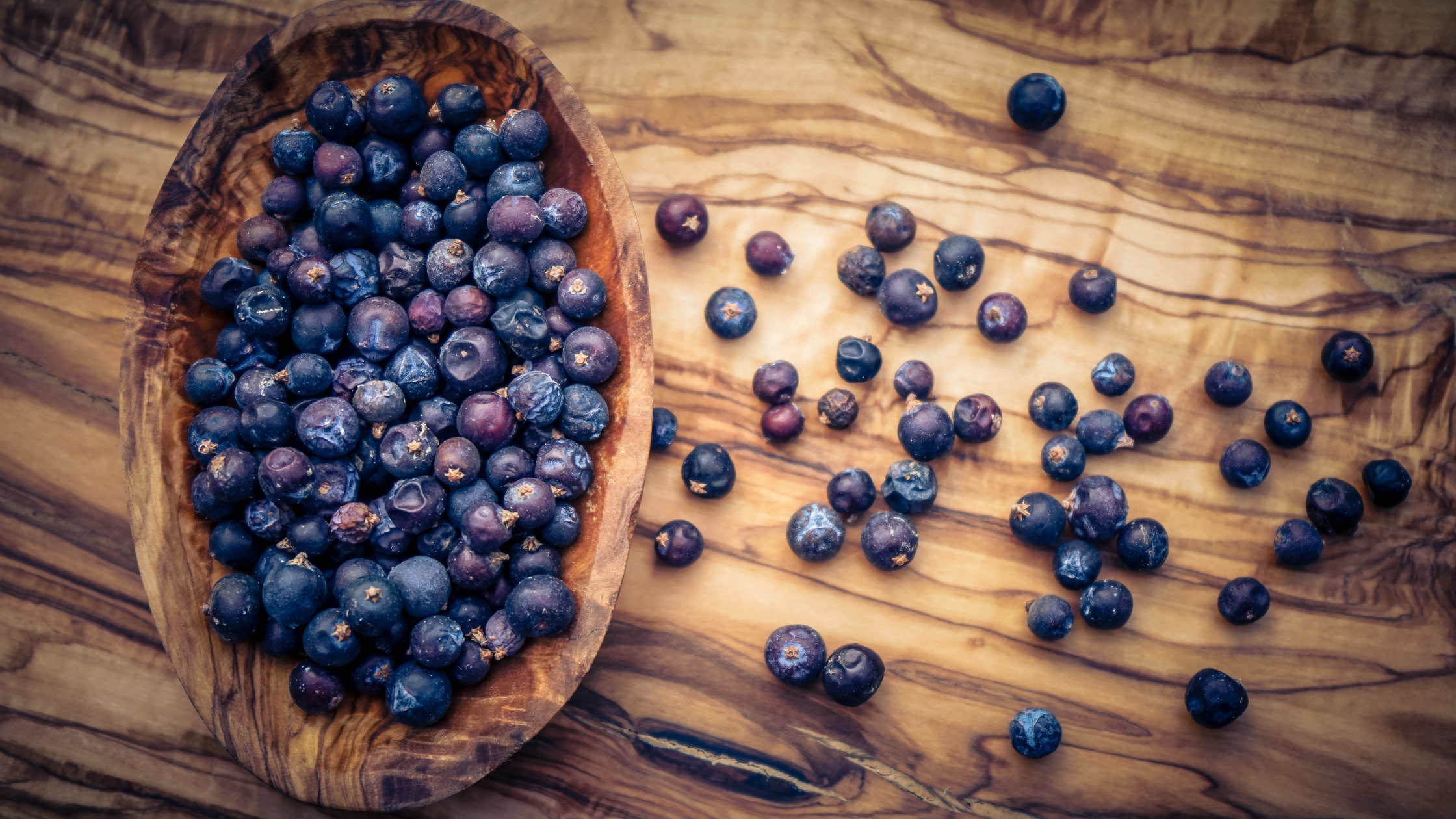
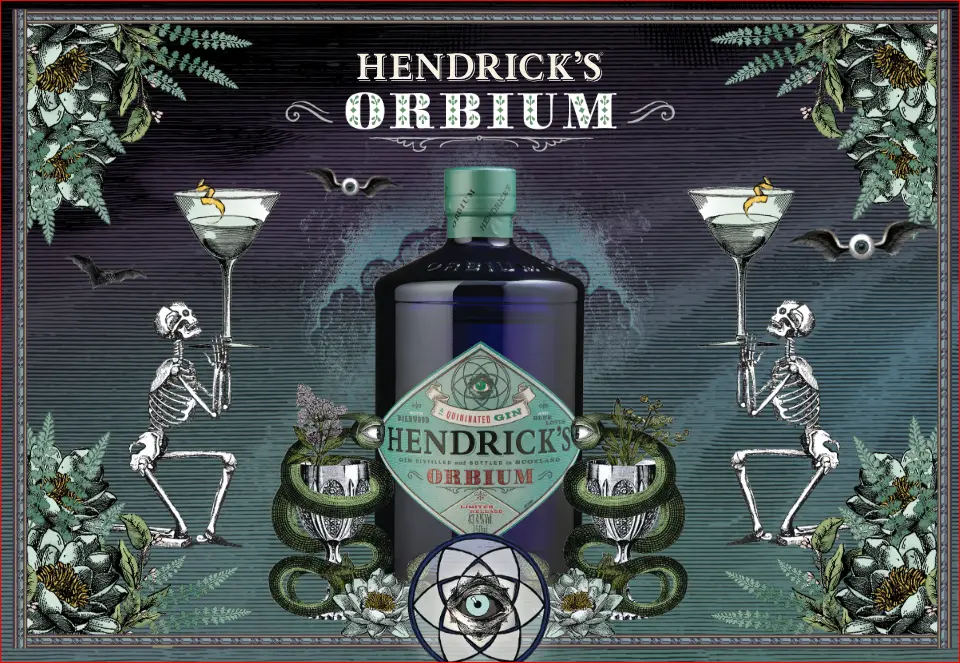
Juniper berry, remains the main flavour profile in all gins, however Hendricks is the gin that pushes away from that profile the furthest and dares to be different allowing other notes to shine through and become quite loud, especially in their limited edition collections like OASIUM.
From Battlefield Boost to British Obsession: The Rise of Gin
By the 17th century, this medicinal elixir had evolved into genever, a Dutch spirit considered the direct ancestor of modern gin. It gained widespread popularity in England during the Thirty Years’ War, when British soldiers fighting in the Low Countries brought the “Dutch Courage” home. Genever became popular with English soldiers during the 17th century when the first Anglo-Dutch wars took place.
British soldiers would often drink genever to gain a well-needed boost of courage! Soon, gin was being distilled all over England, both as a tonic and, eventually, as a cheap and sometimes ruinous drink of the masses. But its apothecary roots & “courageous” rep remained, especially in how it was crafted with a medley of botanicals thought to have healing powers.
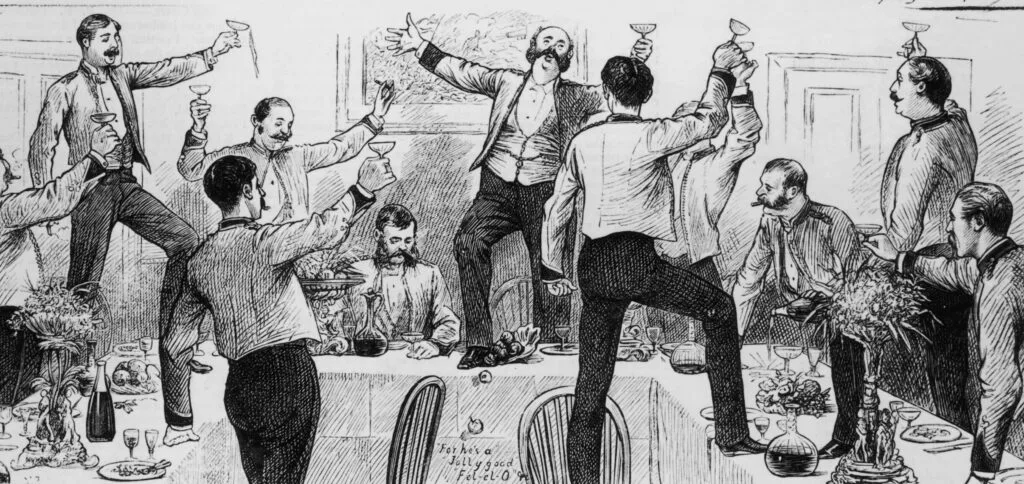
Scenes from the officers’ quarters of a British regiment, circa 1850. These include drunken carousing and a pasttime known as ‘cockfighting’. (Photo by Hulton Archive/Getty Images)
Fast forward to the 19th century, when British colonials in India mixed gin with quinine-laced tonic water to prevent malaria, effectively inventing the gin and tonic, another example of gin’s medicinal mission giving rise to an enduring cocktail.
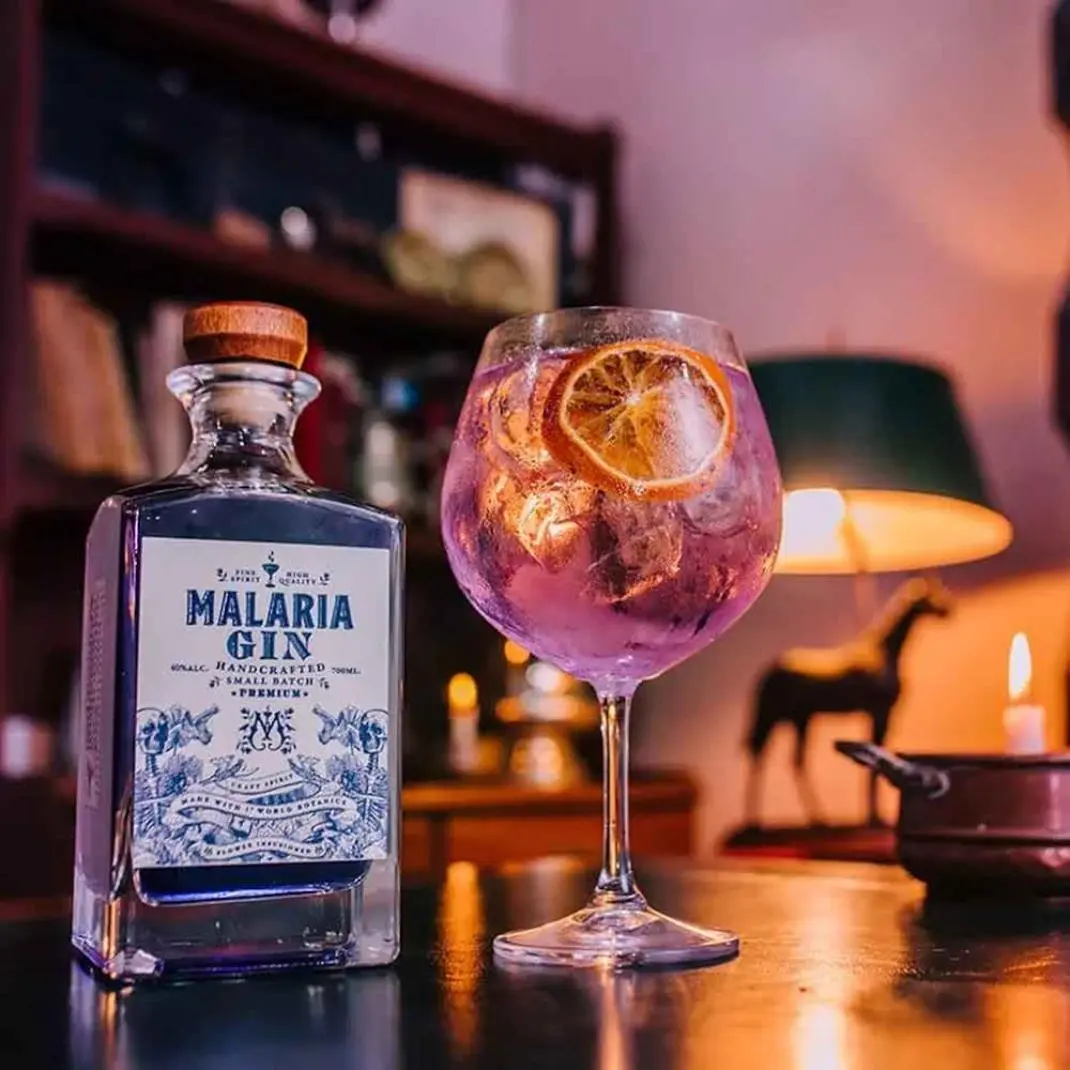
In modern times, Hendrick’s Gin, first launched in 1999 by William Grant & Sons in Scotland, pays tribute to these historical and botanical foundations while reinventing them with eccentric flair. Created by Lesley Gracie, a chemist and master distiller, Hendrick’s set itself apart with a distinctive Victorian apothecary aesthetic and an unusually rich botanical bill.
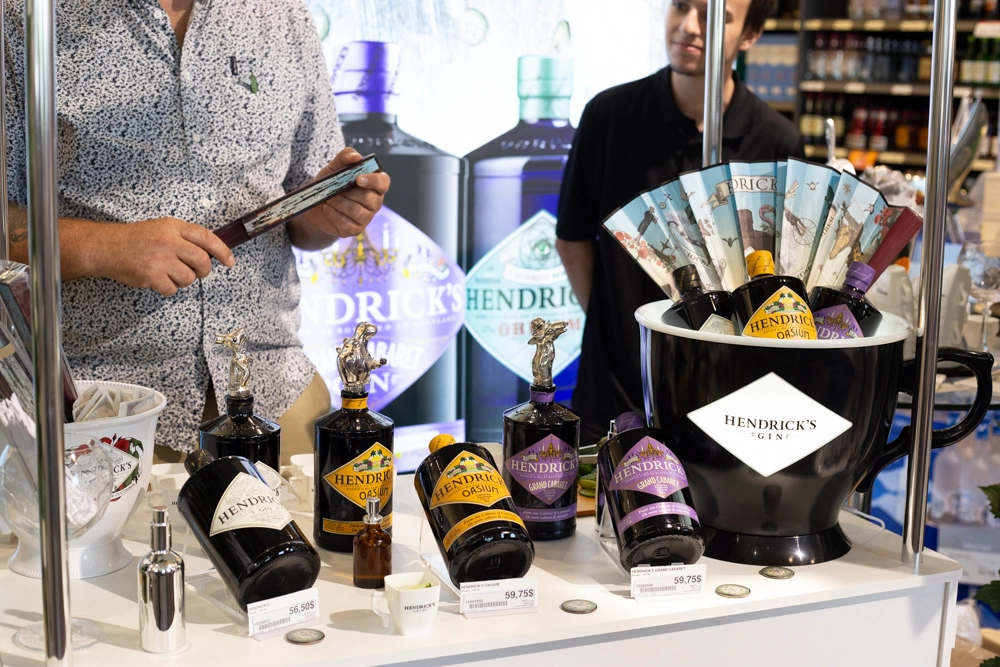
The original Hendrick’s is such a core staple for mixology, but the new OASIUM is so far our favorite limited edition flavour.
The Secret Garden Inside Every Bottle of Hendrick’s
What makes Hendrick’s truly unique is its blend of 11 botanicals, including juniper, coriander, angelica root, orris root, caraway, chamomile, elderflower, yarrow, and cubeb berries. But two signature additions elevated it into a modern classic: Bulgarian rose petals and cucumber essence.
These are added after distillation, giving Hendrick’s its ethereal floral and crisp green notes, making it as aromatic and complex as any old-world tincture.
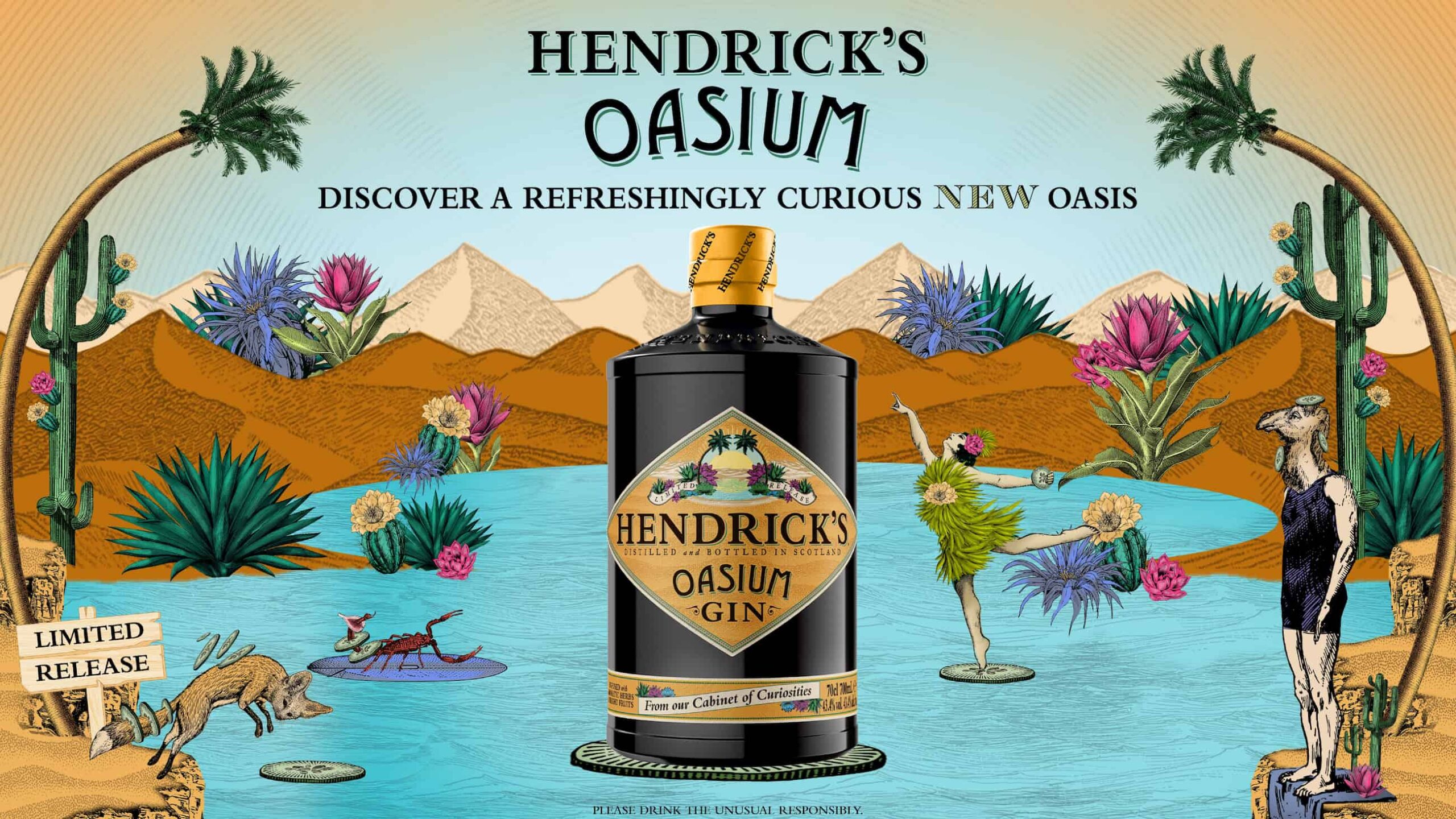
What was Ms Lesley Gracie doing at a faraway desert oasis, and why on earth was she playing camel polo? Such absurd questions are best considered while supping the magnificently bright aromatic gin this inexplicable experience inspired!
Hendrick’s is also unusual in its production: it’s made using two stills, the Carter-Head and Bennett still which extract different botanical characteristics. The Bennett yields depth and warmth; the Carter-Head, a lighter, more refined flavour. The result is a marriage of chemistry and artistry, echoing the methods of ancient apothecaries with a modern twist.
Previously in unusual launches and delicious poisons is Grand Cabaret!