

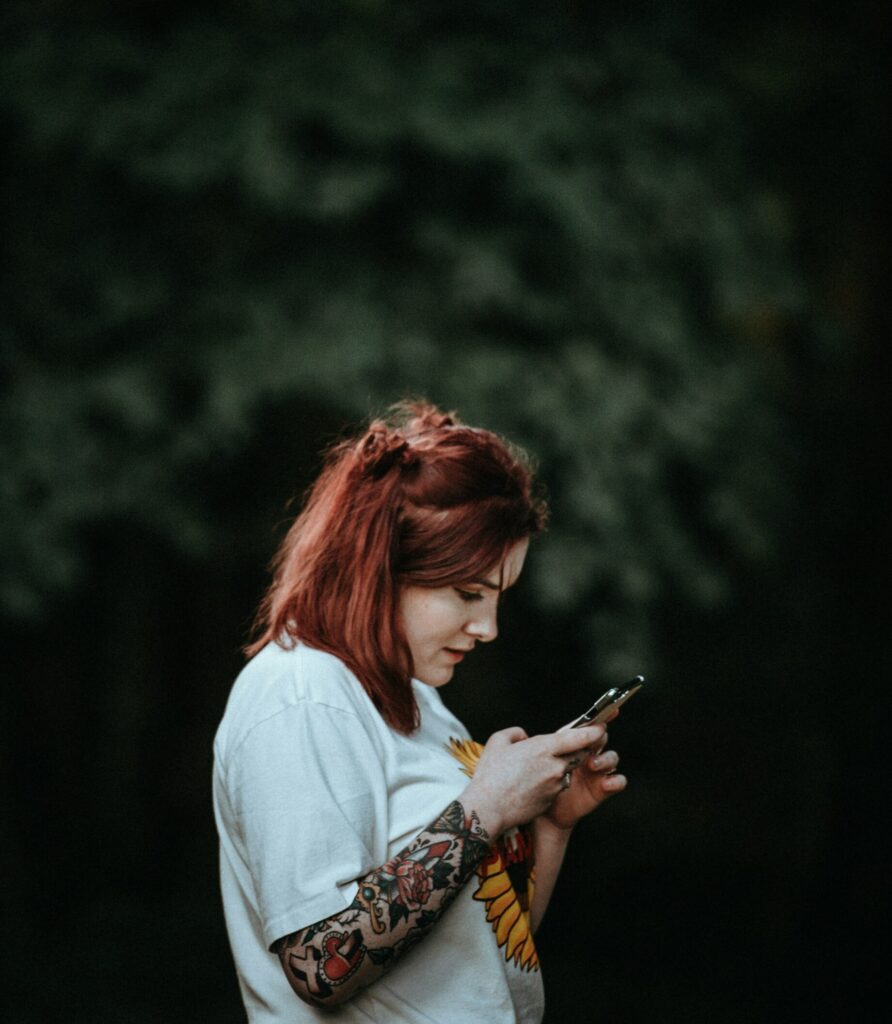
Cover photo: Annie Spratt / Unsplash.
When attention is abundant but commitment is scarce, staying single can be the more romantic choice. Explore the dark side of dating apps through real statistics, dating psychology and the business of digital courtship—and why women may be better off walking away.
You open the app hoping to meet one good man. An hour later, you have assessed a small population, exchanged three forgettable messages and somehow feel less desirable than when you started.
That is the unsettling bargain of modern dating: extraordinary access to strangers, with very little certainty about their intentions.
For women dating in Canada or the United States, the useful question is whether these platforms help create the relationship they want at a cost they are willing to pay. That cost includes attention, money, time and emotional energy.

Swipe right, and right, and right… you may find dopamine but not likely a serious man… Photo: Alexey Elfimov / Unsplash.
Table of contents
- The statistics behind the exhaustion
- Why endless choice can make connection harder
- Players, vulnerability and the performance of desirability
- Your happy ending and the business model
- Tinder, Hinge and Bumble compared
- What happened to courtship?
- What are your actual chances?
- A practical exit guide
The dark side of dating apps: statistics behind the exhaustion
In a nationally representative survey of 6,034 U.S. adults conducted in July 2022 and published in 2023, Pew Research Center found that, among women under 50 who had ever used online dating:
| Experience on a dating site or app | Share reporting it |
|---|---|
| Unwanted sexually explicit messages or images | 56% |
| Continued contact after saying they were not interested | 43% |
| Being called an offensive name | 37% |
| Threats of physical harm | 11% |
| At least one of these four experiences | 66% |
These categories overlap. They describe reported experiences across dating platforms, rather than rates attributable to Tinder, Hinge or Bumble individually. They are U.S. figures, not Canadian prevalence estimates. Source: Pew Research Center.
For Canadian context, the Canadian Anti-Fraud Centre recorded CAD $58.4 million in reported romance-fraud losses in 2024. These losses span romance scams generally, including contact through channels other than dating apps; they cannot be assigned to the three apps discussed here. Source: CAFC.
A full inbox is a poor measure of a woman’s romantic prospects. Attention can include pressure, deception and interactions she never wanted.
Why endless choice can make connection harder
A compelling profile invites a quick judgment. A worthwhile relationship takes longer to understand.

Image source: WP Stock Photos 2026
That mismatch matters. In three studies, psychologists Tila Pronk and Jaap Denissen found that participants became more likely to reject potential partners as they evaluated successive options. Their research describes a “rejection mind-set”: a browsing environment can encourage people to keep saying no. These experiments do not establish that every app causes relationship failure, or that their findings predict any particular woman’s outcome. Source: Pronk and Denissen, 2020.
This is one aspect of the dark side of dating apps: more introductions may bring less openness to the person in front of you.
An ordinary human being has an awkward photograph, an imperfect opening line and qualities that emerge gradually. A feed encourages comparison before those qualities have a chance to appear. Someone can be an excellent partner and an unremarkable profile.
Meanwhile, checking for a reply can become a ritual. If the app increasingly determines your mood, it deserves less access to your day.
Players, vulnerability and the performance of desirability
The dark side of dating apps becomes clearer when people with very different intentions enter the same room without being honest about what they want.
Pew found that 44% of current or recent users identified finding a long-term partner as a major reason for using online dating, while 40% cited casual dating and 24% casual sex. People could give more than one reason, so these are overlapping groups. Source: Pew Research Center.
Wanting casual sex is not inherently dishonest. Pretending to want a relationship to obtain it is.
A persuasive flirt can offer the language of intimacy before offering any evidence of reliability. A vulnerable person may invest in that promise. That dynamic is worth examining without calling women “damaged,” which mistakes someone’s history for a diagnosis.
The research cited here does not establish that apps disproportionately attract psychologically damaged women, exclude confident men, or make men prefer troubled models over other women. “Alpha” and “beta” are also poor tools for evaluating whether a stranger will be a caring partner.
The useful distinction is behavioural: Does this person act consistently, respect boundaries and want what you want?
Charm is an introduction. Character requires observation.
Your happy ending and the business model
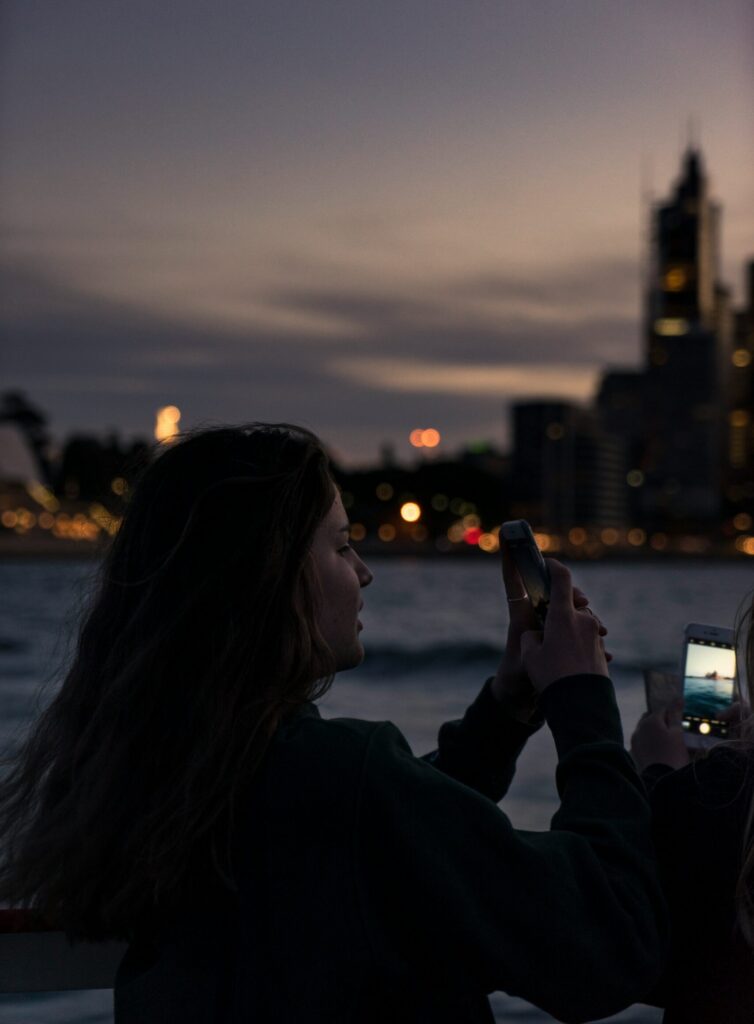
Swiping into the night, chasing the male-centred promise that being “chosen” for marriage will prove your worth. A fairytale many young women have already outgrown… Photo: Jocelyn Wong / Unsplash.
A woman seeking a lasting relationship may want to leave a dating app permanently. A subscription business earns revenue while customers pay.
Match Group, whose brands include Tinder and Hinge, reported approximately US $3.49 billion in 2025 revenue. Its financial definitions identify subscriptions and individual purchases as sources of direct revenue. Source: Match Group’s 2025 results.
That creates a potential tension between a customer’s desired destination and the company’s recurring revenue. It does not prove that an algorithm deliberately prevents compatible people from meeting. Successful couples can also strengthen a platform’s reputation and attract new customers.
The sharper criticism is that purchasing more visibility or functionality cannot purchase someone else’s integrity, attraction or readiness to commit.
Nor is “built by men” an accurate description of the entire category. Bumble was founded by Whitney Wolfe Herd in 2014. Corporate incentives deserve scrutiny regardless of the founder’s gender. Source: Bumble.
Tinder, Hinge and Bumble compared
| App | What to examine | The question worth asking |
|---|---|---|
| Tinder | Paid subscription tiers include Plus, Gold and Platinum. Greater access to app features should not be confused with screening for commitment. | Am I meeting people whose intentions match mine, or just increasing activity? |
| Hinge | Members receive one free Rose weekly, and additional Roses can be purchased. A digital gesture remains a platform feature, rather than evidence of real-world effort. | Does this interest become a thoughtful conversation and a concrete date? |
| Bumble | Its founding story centred women and changing dating conventions. Brand positioning cannot establish that an individual match is trustworthy. | Is the experience actually giving me agency, or creating more work? |
Sources: Tinder subscriptions, Hinge Roses, Bumble’s founding account.
These are product examples, not a ranking of safety or relationship success. No comparable, independently verified success rate for the women described in this guide was established by the sources reviewed.
What happened to courtship?

image source: The Dreamcatcher.com
If you want a man who takes initiative, makes a plan and follows through, you are allowed to want that.
Apps can blur the distinction between being selected and being courted. A match takes little effort. Arranging a considerate date, listening attentively and keeping one’s word tell you considerably more.
“Men should pursue” is a relationship preference, rather than a universal psychological law. Women initiating contact does not establish that the men they meet are insecure. Equally, women do not have to manage an entire budding relationship to prove they are modern.
Let your preferred dynamic become a standard you can observe: he proposes a specific plan, communicates reliably and responds respectfully to a boundary. Your part is to express interest honestly and decide whether his effort suits you.
Healthy pursuit must also accept a no. Persistence after rejection belongs in the warning column.
What are your actual chances?
There is no defensible universal percentage for a “normal woman finding a catch” on Tinder, Hinge or Bumble.
“Normal” and “catch” have no agreed research definitions. A meaningful estimate would require a defined population, relationship goal, observation period and outcome, plus data that account for people who quit or stop responding.
One often-misread statistic deserves particular care: Pew found that 10% of partnered U.S. adults met their current spouse or partner through a dating site or app. That describes where existing couples met. It does not mean an app user has a 10% chance of success. Source: Pew Research Center.
Relationships do form online. Calling them rare exceptions that defeat an algorithm goes beyond what these findings show.
A more useful personal measure is whether your recent experience produces respectful dates with compatible people, without consuming disproportionate time or undermining your confidence.
A practical exit guide
Recognizing the dark side of dating apps does not require a statistically disastrous experience. You can decide an app is wrong for you when its emotional cost outweighs its benefits.
- Take a defined break. Try a month away and observe what happens to your attention and mood.
- Replace the activity. Choose recurring social settings: a class, volunteer group, recreational league or introductions through friends. Repeated contact gives you more opportunities to observe behaviour.
- If you return, set limits. Choose a time budget and a clear relationship intention before opening the app.
- Assess actions early. Endless messaging, repeated cancellations and pressure do not become more promising because a profile is attractive.
- Keep initial meetings public. Use your own transportation, let a trusted person know your plans and never send money or invest on a match’s advice.
- Keep your standards specific. Emotional availability, kindness, reliability and compatible goals are more useful than a fashionable personality label.
You can want romance without volunteering for an endless audition.
The most revealing question may be what the app leaves you with after you close it: a promising connection, or another evening spent trying to feel chosen.
Want to date in the real world? Here is our guide on How to date a black cat female!